Get in touch: +1 888 453 5021


A nontraditional medical applicant is anyone who does not follow the standard path of completing a science-heavy undergraduate degree and applying to medical school immediately after graduation.
Your path to medical school acceptance being less linear is not a liability; it does, however, require a more intentional application strategy.
Admissions committees do not penalize you for taking an unconventional path. Most medical schools review applications holistically, so a well-rounded applicant is preferred. Nontraditional applicants are not evaluated despite their backgrounds. They are evaluated in the context of it.
Admissions committees apply a formal structure called the E-A-M Model, which stands for:
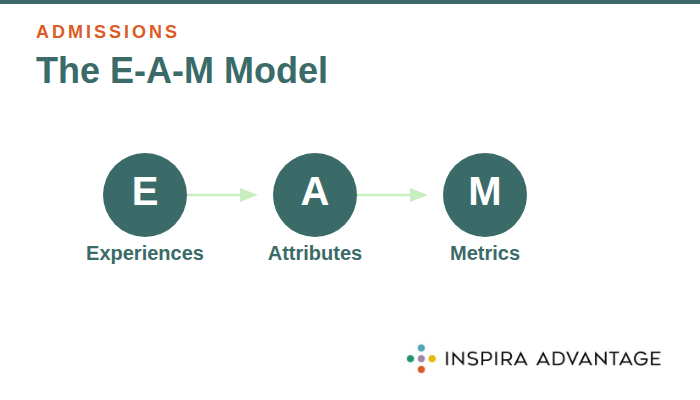
Academic metrics like GPA and MCAT serve as a baseline for academic readiness, while experiences and attributes show the full picture of who you are.
The most important piece of that framework for nontraditional applicants is context. Admissions committees evaluate your background and how it got you to where you are now. A decade spent in another career is not automatically considered a red flag. It is evidence of real-world experience that most 22-year-old applicants lack.
Medical school admissions officers look to diversify the student body and actively seek applicants from all walks of life. Your professional background, life responsibilities, and non-linear timeline can all become strengths when you frame them correctly in your application.
The single question nontraditional applicants must answer convincingly is commitment. Admissions officers look for applicants who know themselves well and can demonstrate, not just claim, that their qualities set them apart as the most serious candidates.
Callie Ginapp, a former admissions committee member at Yale School of Medicine and an expert counselor at Inspira Advantage, highlights this advantage in our webinar on nontraditional applicants:
“Walking away from an established career to start over in medicine is one of the strongest signals of genuine commitment a candidate can send,” she says. “A nontraditional applicant who voluntarily leaves a stable career, a salary, and a professional identity to pursue medicine from scratch is not stumbling into the process. That level of deliberate risk is exactly the kind of initiative admissions committees are looking for.”
Saying you are resilient means nothing. Walking an admissions committee through a moment where you proved it does.
Medical admissions committees look for an applicant's experiences and overall narrative to be coherent with their reasons for applying. Experiences you can’t link to a clear sense of purpose in studying medicine read as a warning sign, not a differentiator.
Every nontraditional applicant has something to explain. Admissions committees are looking for applicants who understand their own story and can tell it confidently.
Lead with your reason for the career change, not your resume. A career change only becomes a liability when an applicant fails to explain it. Admissions officers want to know what pulled you toward medicine, not just what you left behind.
Anchor your explanation in a specific moment or realization. Vague language like "I always wanted to help people" tells a reviewer nothing. A concrete turning point, whether it was a patient interaction, a personal health experience, or a gap you identified in your previous field, gives the career pivot real credibility.
Then connect your former career directly to medicine. For example:
Frame your previous career as preparation for studying medicine.
Your personal statement is the primary place to highlight this. But your secondary essays and interviews need to reinforce the same narrative. Admissions officers notice when your story changes between your personal statement and interviews.
Explain the gap and move on. Unexplained gaps create doubt. Explained gaps, even difficult ones, rarely disqualify an applicant.
Be direct about what happened. Explain whether you:
Admissions officers have heard every version of these circumstances. What they haven’t heard is your version.
Strengthen your gap explanation by highlighting what came after it. Show that the period ended with clarity and intentional action. For example, if you spent two years away from formal education before enrolling in a post-bacc program, the post-bacc is evidence that the gap was a turning point rather than a pattern.
Don’t frame your gaps as wasted time because that’s not true. Every experience, including time spent outside of medicine, shapes the kind of physician you will eventually become.
For example, a two-year education pause to care for an aging parent builds the patience that no clinical rotation can teach. Three years of running a small business develop the financial literacy and operational thinking that directly apply to managing a practice or to understanding why patients delay care.
Make that case with a specific example from your own timeline rather than a general claim about growth or perspective.
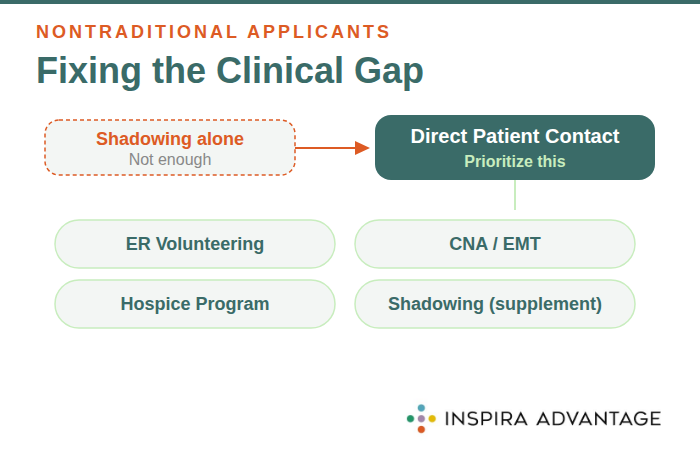
Fix the limited clinical or research gap before you apply to medical school. Limited clinical exposure is one of the most common challenges nontraditional applicants face. But it’s also one of the most correctable.
Prioritize direct patient contact. You can shadow a doctor, but this should not be a substitute for hands-on experience. Volunteering in an emergency department, working as a CNA or EMT, or joining a hospice program exposes you to environments where the emotional and physical weight of medicine becomes palpable.
Admissions committees want evidence that you understand what the work actually involves before you commit to the field of medicine.
If you don’t have as much research experience, find a post-bacc program with built-in research opportunities or reach out directly to physicians or researchers at your local institutions.
If your experience is genuinely limited at the time of your application, make sure you explain:
Limited research experience with strong self-awareness reads better than an activity list with no genuine reflection.
Every step on your path should connect to the next. Admissions committees aren’t asking you to defend why it took this long for you to pursue medicine. They are asking you to show that each phase of your life pointed, in some way, toward medicine.
Outline your entire journey clearly in your personal statement. An admissions reader should be able to follow your trajectory and understand, at each major turn, what drove the decision and what it taught you. If your timeline includes multiple pivots or spans a significant length of time, the connections between those phases matter as much as the phases themselves.
Address your timeline directly rather than hoping reviewers will fill in the gaps themselves. The narrative does not need to be linear. It needs to be legible.
Work with an expert counselor at Inspira Advantage to get professional help with your application and turn your nontraditional background into your strongest asset. With over 20 years of experience, our counselors know how to highlight your perspective to help you stand out.
Here are five expert tips to help you stand out as a nontraditional medical school applicant.
For even more tips like these, watch our video below on how to get into medical school as a nontraditional applicant.
Most nontraditional applicants mention their prior career. Few actually use it to their advantage. There is a big difference between referencing your background and demonstrating how it makes you a better candidate than someone who applied right after undergrad.
Connect a specific skill or insight from your former field to a specific clinical scenario.
For example, a former teacher who spent years breaking down complex concepts for struggling students has a direct advantage in patient education. A former attorney trained in building arguments from evidence brings that same precision to diagnostic reasoning.
Name the skill you learned, relate it to a clinical context, and show the committee a physician they cannot get from the traditional applicant pool.
Dr. Bima Hasjim, a former admissions officer at UC Irvine Medical Center and an expert admissions counselor at Inspira Advantage, shares his opinion on this during our application narrative webinar:
“Don't shy away from a previous career outside medicine,” he says. “The patients you will treat are not other physicians. They are teachers, accountants, park rangers, and construction workers. Nontraditional applicants who have lived and worked in those same worlds often connect with patients more naturally than someone who has been in a lab or lecture hall their entire adult life.”
Dr. Hasjim encourages nontraditional students to view their backgrounds as assets, noting that clinical excellence requires connecting with people from all walks of life.
However, do not make this claim in abstract terms. Walk through a moment where your prior expertise showed up in a clinical setting. Maybe it was during a shadowing experience, a volunteer shift, or a patient interaction in a healthcare-adjacent role. Concrete examples carry this argument. Assertions do not.
Admissions officers read your entire application. If your personal statement describes a pivot driven by a specific patient experience, your secondary essays should provide more context. And your interviews should anchor every answer back to the same core motivation. When those three components tell slightly different stories, your argument falls flat.
Start by identifying the single clearest reason you are pursuing medicine. Not the most impressive reason. The truest one. Build everything outward from that point. Each secondary essay prompt is an opportunity to add a new layer to the same narrative, not to introduce a competing one.
After drafting your primary and secondary applications, read them back-to-back and ask whether a stranger could identify your core motivation from either document alone. If the answer is yes for both and the motivation matches, you’ve built a great foundation.
Clinical hours are not something to check off a list. The type of clinical setting you choose tells an admissions officer something about how serious and self-aware you are. If your personal statement says you want to work in underserved communities, your clinical experience should reflect that. If you are motivated by a specific condition or population, your hours should show some exposure to that context.
Generic hospital volunteering from three years ago will not prove your point. What committees want to see from nontraditional applicants specifically is recent, direct patient contact that confirms you understand what practicing medicine actually demands, physically, emotionally, and professionally.
If you’re building hours of patient interaction while working full time, prioritize roles with the most direct patient contact per hour, such as:
Aim for quality over quantity. Secure at least 300 hours of clinical experience before you apply, as many traditional applicants aim for 100 hours.
The standard nontraditional applicant letter of recommendation confirms that the writer likes and respects the applicant. That is not enough. What distinguishes a strong letter for a nontraditional candidate is one that directly addresses the qualities committees are most skeptical about:
Find recommenders who have witnessed you:
A post-bacc professor who watched you master biochemistry after a decade away from science can speak to academic readiness in a way no former employer can. A physician who has directly observed you handling patients can speak to whether you have the foundational skills for a career in patient care.
Talk to your recommenders before requesting a letter from them. Give them a summary of your narrative, the competencies you want them to address, and concrete examples from your time together that they can reference. A letter that aligns with the rest of your application binds everything together.
Every reviewer evaluating a nontraditional applicant likely wonders the same question: If medicine was the right call, why did it take you so long to get here?
The applicant who waits to answer this question during an interview has already made a critical error. The applicant who addresses it directly in their personal statement eliminates the doubt before it festers. The last thing you want is to leave the admissions officer with more questions than answers.
Your answer to the “why now” question needs three components:
Vague answers like "I always felt drawn to helping people" do not correctly answer this question. An admissions officer who reads your file and still cannot answer "why now" on your behalf probably won’t advocate for you. Make the answer so clear that they could reiterate it themselves.
Your personal statement is the only place in the application where you control the full narrative. For nontraditional applicants, it’s the most important document you will submit.
Start by identifying the single experience that made studying medicine feel undeniable for you. Not the first time you thought about it. The moment it became a real decision.
For nontraditional applicants, this moment often comes from something like:
Whatever it was, it needs to be specific enough that a reader who doesn’t know you could picture it.
That moment becomes your anchor. Medical school personal statements that open with a scene, a specific memory, or a concrete encounter pull a reader in immediately. Ones that open with a general statement about a passion for medicine do not.
After you establish your opening, your personal statement needs to account for your timeline in a way that feels purposeful rather than defensive. Admissions officers are not expecting a straightforward path to medicine. But they are expecting you to make sense of the one you actually took.
Write out every major phase of your life before medicine:
Then ask, for each phase, what it taught you that a traditional applicant would not know. That’s the material your personal statement needs to highlight.
The goal is not to justify the time. It is to show that each chapter of your life contributed something to the physician you want to become. For example, a career in finance might’ve taught you how systems fail people. A background in education might’ve taught you how to meet someone where they are. Highlight the lesson you learned, not just how you got here.
Once your timeline is mapped out, the next step is to draw an explicit line between your prior life and your clinical identity. This is where most nontraditional personal statements lose their audience. Many applicants describe their backgrounds in detail but never make the connection to medicine clear enough for a committee to really feel it.
Do not leave that connection implicit. State it. Explain how the skills, perspectives, or experiences from your previous career will show up in the exam room, on the wards, or in the communities you plan to serve. The more specific you are about the type of physician you want to become, the better your odds of standing out.
Nontraditional applicants almost universally over-explain their career pivot. Two full paragraphs justifying why you left your previous career read as anxiety, not confidence.
Acknowledge the transition directly, in no more than a few sentences, and move on. The explanation should answer two questions:
Aim for a confident tone, not a defensive one. You’re not asking for permission to take this path. You’re reporting, clearly and without apology, that the path led here and that you’re ready.
Your career pivot is not definitive proof that you’ll make an excellent physician. What you did after the pivot is. A personal statement that ends with the realization that medicine was the right call misses the most important evidence an admissions reviewer needs to see.
Use the final portion of your personal statement to walk through the intentional steps you took after making the decision, including:
This section answers the question committees are most focused on: Is this person actually ready, or are they still figuring it out? Concrete action is the only credible answer.
End your personal statement by naming the specific type of physician you are working toward becoming and the population or problem you intend to serve. A reviewer should finish reading your statement knowing exactly where you’re headed, not just where you’ve been.
Most applicants edit their personal statement only for grammar and syntax. Nontraditional applicants especially must edit for story. Read the final draft and ask whether a complete stranger could:
If any of those three concepts are unclear, your personal statement isn’t finished. Have someone unfamiliar with your background read it and tell you, in their own words, why you’re pursuing medicine:
Every sentence should either advance the story or deepen the reviewer's understanding of who you are as a future physician. Remove anything that does neither.
These medical programs have demonstrated, through their admissions policies, class composition, and stated values, a genuine openness to nontraditional applicants.
We evaluated every school on this list against the same set of criteria, pulled directly from recent AAMC MSAR data and each institution's published admissions policies:
No school was included solely on the basis of prestige. A well-known name means little if the admissions culture does not, in practice, support the nontraditional path.
The application process for nontraditional applicants follows the same timeline as that for other candidates. What changes is how you approach each component and what you prioritize within it.
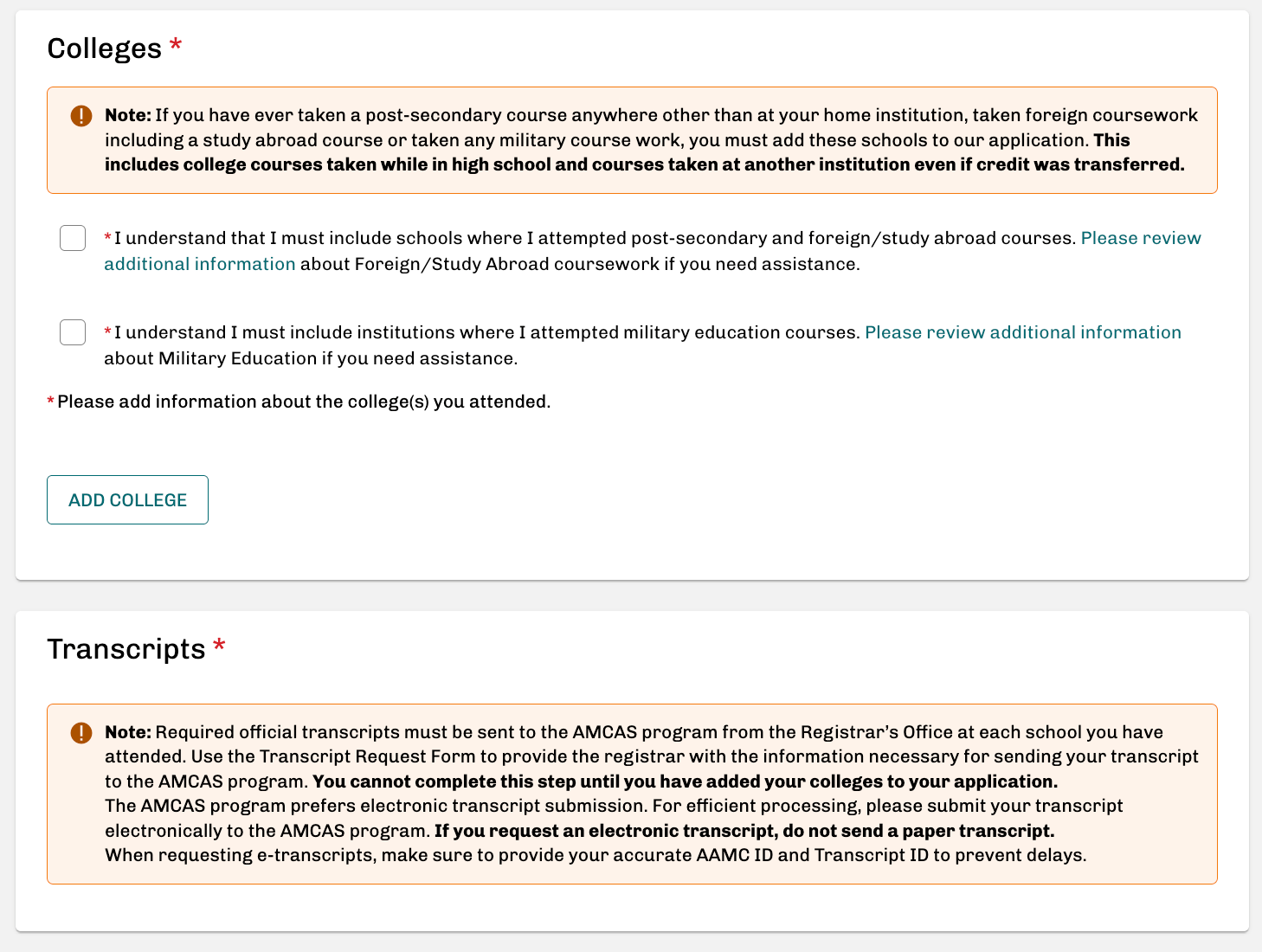
The American Medical College Application Service (AMCAS) is the centralized application platform used by all MD-granting medical schools in the United States. You submit one primary application through AMCAS, and it distributes your materials to every school on your list.
Create your AMCAS account and familiarize yourself with the portal before the application opens in May. The application requires you to enter your full academic history, including:
For nontraditional applicants with multiple institutions, incomplete transcripts, or coursework from decades ago, this step might take you longer than you expect. Request all official transcripts early, including transcripts from institutions where you only took one or two courses.
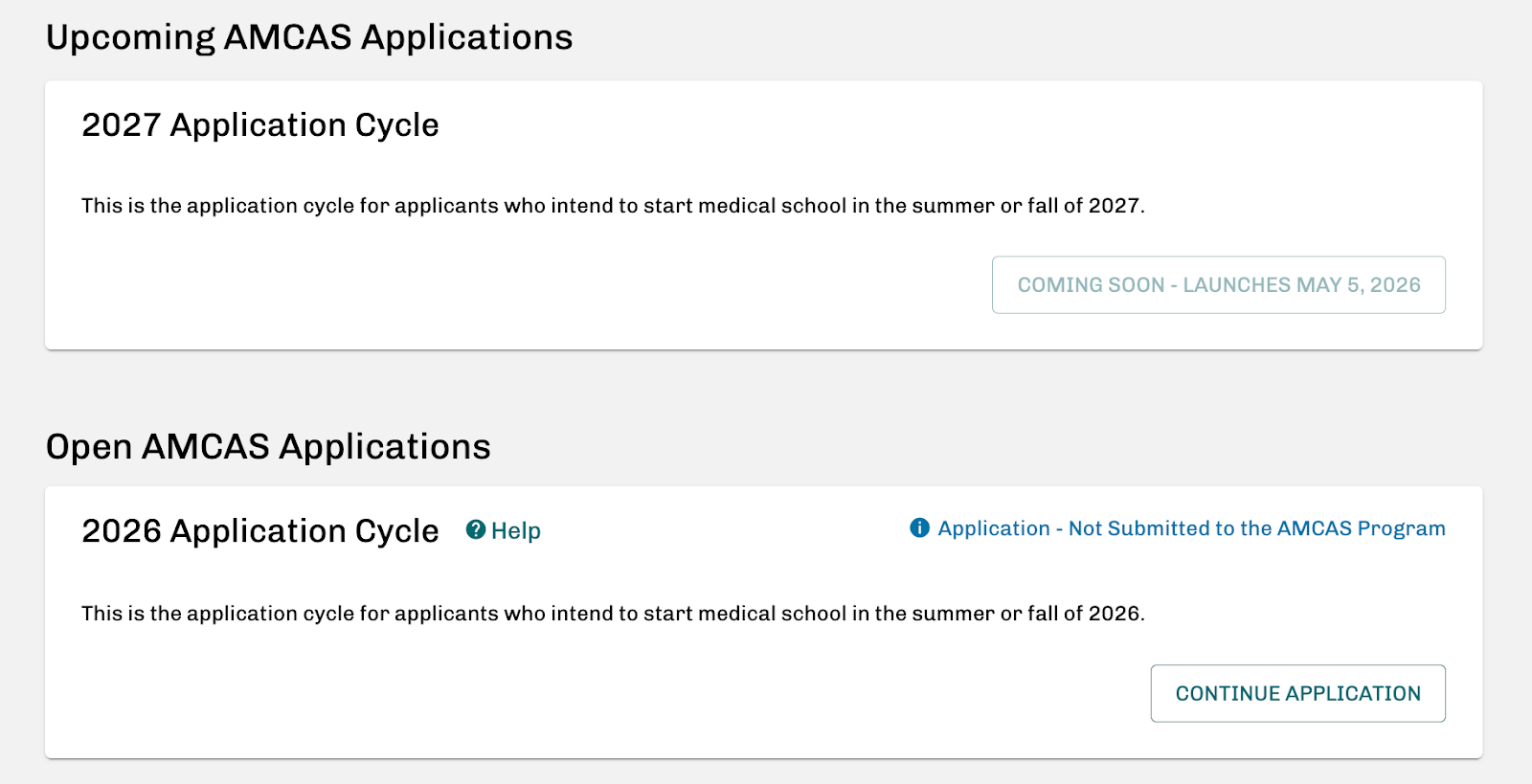
AMCAS opens for submission in late May. Most medical schools use rolling admissions, meaning they review and extend interview invitations as applications arrive throughout the cycle.
Submit your primary application in the first two weeks of June if at all possible. Every week you delay in the summer is a week lost against candidates who applied earlier. Interview slots, waitlist positions, and acceptances are all sent to applicants earlier in the queue.
Nontraditional applicants who spend the summer perfecting their applications before submitting often find themselves competing for an already full interview calendar by October.
AMCAS recalculates your GPA using its own formula, which includes every course you have ever taken at every institution, including:
Your AMCAS GPA will likely differ from the overall GPA on your diploma.
For nontraditional applicants, this matters because a strong recent academic record can be pulled down by coursework from 10 or 15 years ago. Know how AMCAS calculates your GPA before you submit, so there are no surprises when schools see your academic history.
If your older record is weak, strong post-bacc grades and a competitive MCAT score are the primary tools available to offset it.
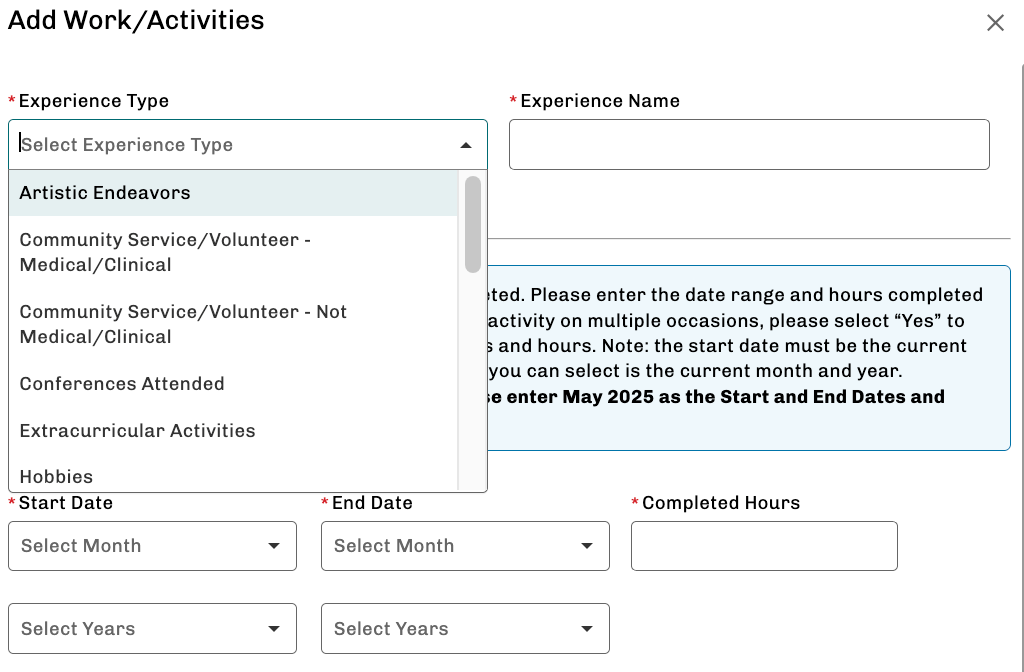
AMCAS gives you 15 activity slots on the Work and Activities section to record your experiences, each with a 700-character limit. Three of those slots can be designated for your most meaningful experiences, with a limit of 1,325 characters.
For nontraditional applicants, your most meaningful activities are where your prior career, your most significant clinical experience, and your career change moment belong. Don’t waste a most meaningful designation on a standard shadowing experience when you have a decade of professional work that shaped your decision to pursue medicine.
Every activity description should answer two questions:
Avoid merely restating the role title. Use the limited space to show the admissions committee something they cannot find anywhere else in your application.
Most medical schools do not accept MCAT scores older than three years prior to matriculation. If your score falls outside that threshold, you will need to retake the exam regardless of how well you performed the first time.
For nontraditional applicants applying to MD programs, aim for a score above 512.1, as this is the average score of matriculants in the 2025-2026 admissions cycle. If your current score falls below the median for the schools on your list, retaking the MCAT can be a good idea.
After reviewing your primary application, most schools will send a secondary application with additional essay prompts. Respond to each secondary within two weeks of receiving it. Procrastinating on secondaries can affect your position in a rolling admissions cycle.
Each secondary prompt asks something specific. Answer it directly before adding context. For nontraditional applicants, the diversity and challenge prompts are the most important ones to get right because they are the clearest opportunity to explain what your background brings to that specific program.
Reference the school by name, cite specific programs or faculty where relevant, and connect your goals directly to what that institution offers. A secondary that could have been sent to any school on your list will read as lazy or unmotivated.
Medical schools will begin receiving your materials typically two to six weeks after AMCAS verifies your primary application. Use a tracking spreadsheet to record every school on your list, the date you submitted your secondary, and any communications you receive.
If you receive an interview invitation, respond within 24 hours and confirm your preferred date. If you are waitlisted, send a letter of continued interest to that school in the spring, updating your application with any new clinical hours, coursework, or developments since you submitted your application. Keep it to one page and make it specific to that program.
The best medical schools for nontraditional students are Oregon Health & Science University, Harvard Medical School, Brody School of Medicine at East Carolina University, and Case Western Reserve University. These medical schools emphasize nontraditional applicants in their admissions culture, class composition, and stated mission.
No. Admissions committees evaluate the quality and depth of your clinical experience, not whether you were compensated for it. Volunteer clinical work carries the same weight as paid positions when the experience involves direct patient contact and genuine exposure to the realities of medical practice.
What matters is that your hours are recent, hands-on, and substantial enough to demonstrate that you understand what practicing medicine actually demands. A volunteer shift in an emergency department, a hospice program, or a community health clinic can be more compelling than a paid administrative role with minimal patient interaction.
Start with the roles that offer the most direct patient contact per hour of your time. EMT certification, CNA work, and emergency department scribe or technician positions are the fastest ways to build meaningful clinical hours while working around a full-time schedule.
For shadowing specifically, reach out directly to physicians in specialties that align with your stated interests. Use your alumni network, your post-bacc program connections, or cold outreach to local clinics and hospital departments. Most physicians who take on shadowers do so because someone asked directly and made it easy to say yes.
Nontraditional applicants should apply to DO schools alongside MD schools. DO programs are generally more flexible in evaluating older academic records, career gaps, and nontraditional timelines, and several osteopathic programs, such as Idaho College of Osteopathic Medicine and A.T. Still University – Kirksville College of Osteopathic Medicine, have explicit pathways for career changers. If your GPA or MCAT falls below the median for MD programs on your list, adding DO schools gives you a stronger overall application strategy.
The biggest mistake nontraditional applicants make is applying before their application is actually ready. Nontraditional applicants who rush to submit before completing recent science coursework, accumulating sufficient clinical hours, or securing strong letters of recommendation, enter the cycle with structural weaknesses that no personal statement can fix. A one-year delay to strengthen those components nearly always produces a better outcome than applying prematurely.
The next most common mistake is writing a personal statement that describes the journey without making the case for medicine. Admissions committees do not need a chronological summary of your career. They need to understand why your specific background makes you a stronger physician candidate than someone who came straight from undergrad. Nontraditional applicants who fail to draw that connection explicitly leave the most important argument unmade.
Most nontraditional applicants need to complete prerequisite coursework, build clinical hours from scratch, and establish new academic relationships for letters of recommendation before they’re ready to apply. That preparation phase often takes one to three years, depending on where you’re starting from. However, nontraditional applicants follow the same application calendar as every other candidate.
Orthopaedic Surgery Resident Physician
Lewis Katz School of Medicine at Temple University


Get 25+ free medical school personal statements written by our succcessful applicants free of charge. No strings attached.


.svg)

