Get in touch: +1 888 453 5021


Each year, tens of thousands of qualified applicants compete for limited spots at medical schools across the country. In this guide, you will learn how admissions committees evaluate applications and how to maximize your chances of acceptance.
Admissions committees at MD-granting schools in the United States read applications through a holistic review lens. In practice, this means medical school admissions officers consider a mix of academic and non-academic factors, clinical and non-clinical experiences, personal attributes, competencies, interviews, and a school-specific mission fit, rather than relying on any single academic metric to make an admissions decision about an applicant.
The Association of American Medical Colleges (AAMC) formalizes this approach, reporting that nearly all medical schools utilize at least some elements of holistic review.
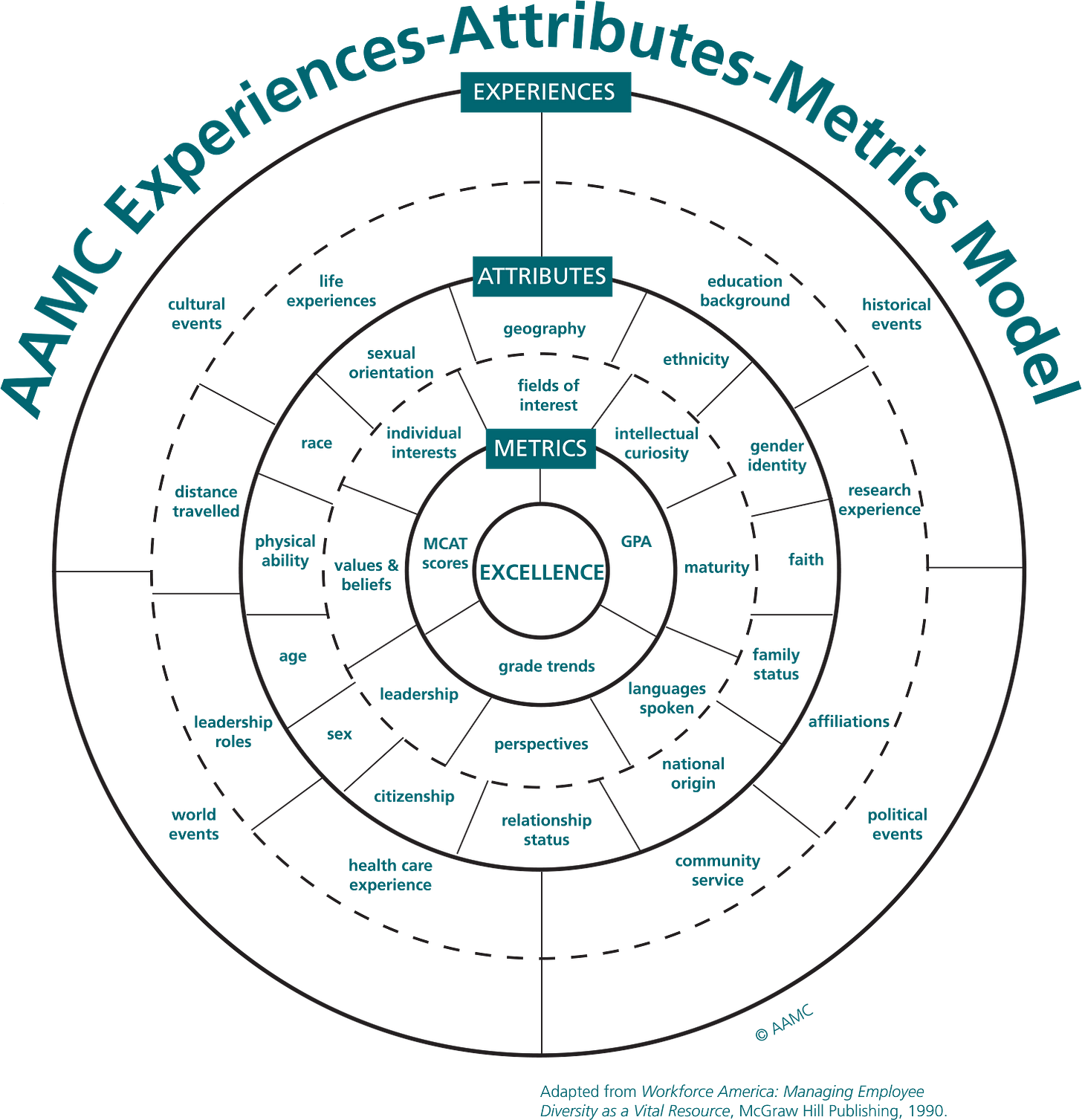
Source: https://students-residents.aamc.org/media/5781/download
In the AAMC framework, admissions reviewers integrate Experiences, Attributes, and Academic Metrics (E-A-M) to think broadly about diversity and to help reviewers find mission-centric experiences and attributes in an application. Medical schools are encouraged to align applicant selection with their mission and to evaluate applications in context rather than by fixed cutoffs. For example:
Medical school admissions committees employ a holistic review process to evaluate each applicant individually. This process balances academic metrics with the applicant’s experiences and attributes.
However, in Inspira's How Admissions Officers Review Med School Applications webinar, Dr. Katherine Munoz, a Virginia Commonwealth University School of Medicine graduate and admissions officer at the University of Wisconsin School of Medicine and Public Health, revealed a key difference between a 522 and a 523 MCAT score:

Dr. Munoz’s statement underscores the concept of an academic threshold, the point at which your GPA and MCAT score are strong enough to keep you in consideration for acceptance. Once you cross this threshold, tiny differences stop having much of an impact.
For example, an applicant with a 521 MCAT score at a school where the median is 519 has already proven academic readiness, so moving from a 521 to a 523 probably won’t affect their admissions chances. Similarly, a GPA of 3.92 compared to 3.96 is unlikely to alter an admissions decision once you’re already in the school’s target range.
The stages of the medical school application process include:
An applicant’s file typically consists of the primary application (AMCAS, AACOMAS, TMDSAS, BS/MD, MD/MPH, etc.), recommender letters, and school-specific secondary essays. Secondary essays are typically a second step after the initial application review. Admissions committees receive these materials and distribute them to application reviewers.
In Inspira’s webinar, AMA With a Former Medical School Admissions Officer: How To Get Accepted, Dr. Munoz emphasized the human component of admissions officers:
This human element means that engaging, authentic application content matters more than seemingly perfect but generic responses.
Most medical schools use a screening stage to filter out applications that don’t meet baseline requirements (prerequisite courses, minimum GPA, or MCAT scores). After that, applications go to independent reviewers who score activities, clinical exposure, personal statement, and letters, writing short comments on strengths, weaknesses, and whether the applicant should move forward.
Once the reviewers are finished reviewing your application, an intermediate or an executive committee member (or small panel) combines those reviews, your academic metrics, and possibly additional updates from the applicant to decide which applicants will be invited to interview.
The reviewer makes the interview decision with the help of the two prior evaluation write-ups, the automatic score from GPA/MCAT, and their own thoughts.
Applicants are invited to advance to the interview stage. Medical school admissions committees may use interview formats such as:
During interviews, the committee gathers further data on your communication skills, ethical reasoning skills, maturity, and fit for the medical school. Interviewers sometimes produce their own scores and write evaluation notes.
After interviews, the entire admissions committee receives:
Many members do not re-read the full application; instead, they focus on summaries and interview scores.
Then the entire admissions committee votes, and each member gives a numeric or categorical rating. The top-scoring group is accepted, and other applicants are waitlisted or rejected.
Sometimes during deliberation, admissions committee members flag borderline applicants for deeper discussion or tie-breaker consideration.
MCAT scores and GPA are the two most important metrics in a medical school application, with GPA being particularly important in predicting an applicant's ability to handle the academic rigor of coursework.
If an applicant's GPA is lower than the medical school’s average, their MCAT score could determine whether they get accepted into medical school. This is because a higher MCAT score can demonstrate to medical schools that, while various factors may have compromised an applicant’s academic performance in undergraduate courses, they possess the knowledge and reasoning abilities necessary to succeed in medical school.
Admissions committees review your overall GPA, but your science GPA is often weighed higher. If your science GPA is much weaker than your overall GPA, it could harm your chances of getting into medical school.
However, your upward GPA trends demonstrate significant readiness for medical school. Applicants whose grades improve over time, particularly in science coursework, often benefit from the narrative of growth and perseverance. Reviewers may also comment on this upward trend in the interview stage.
In Inspira's How Admissions Officers Review Med School Applications webinar, Dr. Katherine Munoz explained the importance of upward grade trends:
Conversely, a declining GPA raises concerns about sustained motivation or the ability to handle increasing course difficulty. The context surrounding GPA matters significantly to admissions committees.
Admissions committees consider course rigor, the reputation of the undergraduate institution, whether students challenged themselves with advanced coursework beyond minimum requirements, and any extenuating circumstances that affected academic performance.
The MCAT gives a standardized measure across medical schools and majors for medical school admissions committees. Admissions officers often consider your total MCAT score, but also section scores and whether there are glaring gaps (for instance, a very low CARS score relative to your science subscores). Depending on the school’s policy, some schools will evaluate your best MCAT score, others use your average score, and others only look at your most recent score.
Since the MCAT is only one test, some admissions officers prefer to see an upward trend in your GPA. For example, if you began your undergraduate studies with a 3.60 GPA but achieved a 3.90 GPA by your fourth year, this can demonstrate longitudinal growth.
Candidates with very low GPAs or MCAT scores may not reach the application review stage. If your academic numbers fall far below a school’s median, your application may be rejected. However, reviewers sometimes make an exception for borderline statistics if they see extenuating circumstances or strong upward academic trends.
Retaking the MCAT can improve an applicant's competitiveness, but some medical schools might not consider your retake. An improved score demonstrates commitment and academic growth. Multiple attempts without improvement or with declining scores may raise concerns about your test-taking ability or persistent knowledge gaps.
Clinical exposure and patient contact are some of the most critical components of a medical school application. Admissions committees want evidence that you have encountered patients, observed care delivery, and understood what being a clinician demands.
Paid roles like these are great experiences to highlight in your application:
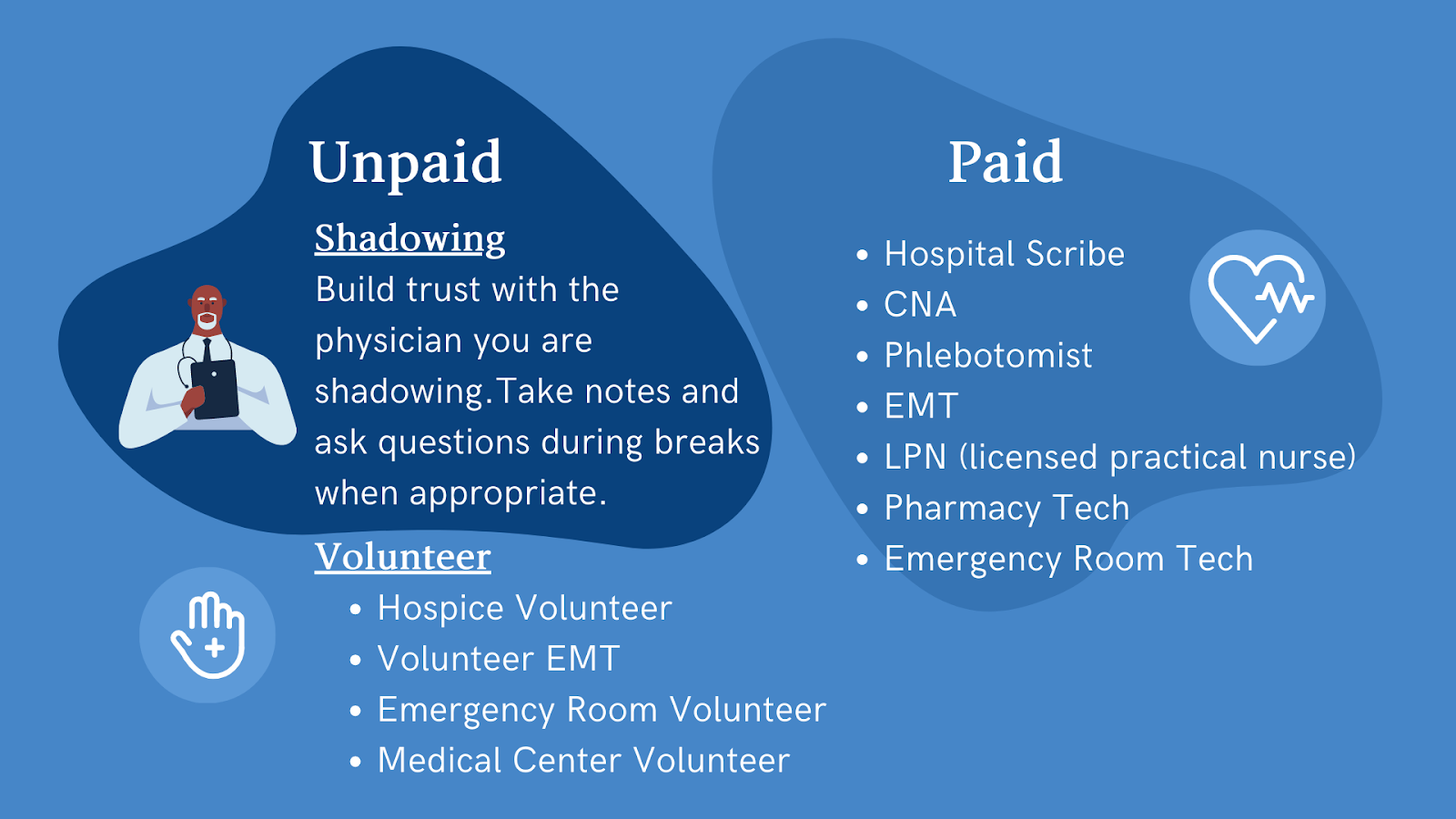
Shadowing experience is also important to include in your medical school application, but it can be seen as background support when compared to extensive research or clinical experience.
Extracurricular involvement provides admissions committees with evidence of an applicant's interests, values, and personal development beyond the classroom. These activities reveal how applicants spend their discretionary time and what causes or pursuits they find meaningful.
However, the quality, length, and depth of extracurricular engagement often matter more than the quantity of activities listed on an application. Dr. Munoz emphasized this principle strongly in the webinar:
This quote highlights that medical school admissions officers look for sustained commitment rather than superficial participation. Long-term involvement in fewer activities demonstrates dedication and the ability to make meaningful contributions over time.
Leadership roles within organizations show initiative, responsibility, and the ability to influence and motivate others. Progressive responsibility over time indicates growth and increasing trust from peers and mentors.
Admissions reviewers value sustained, meaningful engagement that shows service, leadership, teamwork, cultural awareness, and initiative. AAMC allows applicants to tag up to three “most meaningful experiences,” which helps admissions officers focus on impact rather than sheer quantity. You typically have 700 characters per experience in AMCAS. However, for these three meaningful experiences, AMCAS will allow an additional 1,325 for you to elaborate further.
Although not an official requirement, nearly 90–100% of all matriculants at the top-10 medical schools in 2024 had research experience on their application, according to the Medical School Admission Requirements (MSAR). Admissions committees look for:
Admissions officers also value your understanding of the scientific process and your contribution to projects.
If your research role is merely observational, reviewers will scrutinize what you actually did. Make sure to answer questions in your personal statement or interviews, such as:
Admissions reviewers value long-term volunteer service (e.g., mentoring, nonprofit work, community outreach) because it shows dedication and growth. Leadership roles, especially those where you raised funds, led teams, or made decisions, are highly valued. Admission committees assess whether you can take on responsibility and make a tangible impact.
According to the AAMC, the number of first-year enrollees in 2024 demonstrated a strong commitment to community service, with matriculants cumulatively performing over 16.4 million community service hours, an average of 709 hours per student.
Beyond numbers, reviewers want to see what you cared about, how you handled challenges, and how the experience impacted you.
Yes, according to Dr. Munoz, direct clinical exposure is often regarded more highly than research experience because it helps confirm informed motivation for medicine. Research experience weighs more heavily at research-intensive schools or for MD-PhD programs. Many schools and advisors encourage both if possible, with emphasis on depth and reflection over checking a box.
The personal statement is your opportunity to convey a coherent story that ties your background, motivations, and goals into a single narrative. Most personal statements are “just fine.” However, about 5% of personal statements are truly standout.
Dr. Katherine Munoz shared an important perspective on personal statements in Inspira’s webinar:
Strong personal statements require substantial time investment. According to Dr. Munoz, the personal statement should take months to develop properly, from initial planning to the final draft. The extended timeline allows for brainstorming, drafting, seeking feedback from trusted advisors, substantial revision, potentially discarding and restarting if necessary, and allowing time between drafts to return with a fresh perspective.
To stand out when writing your personal statement:
If you had challenges (failures, setbacks), you can mention them briefly if you show longitudinal growth.
Secondary prompts often ask why you want to attend the particular medical school you applied to or how you'd contribute to its mission. Admissions officers judge generic answers harshly. Medical schools want to see how your experience in medicine and goals align with their values, clinics, research strengths, or community service priorities. Demonstrating knowledge of the school’s programs, patient population, or curricular approach helps signal a good fit.
Medical schools typically require three to five letters of recommendation, often two from a science professor and one from a non-science or clinical professional. Some medical schools accept or prefer a committee letter (a prepackaged set from your institution). Whether you submit individual letters or a committee letter, what matters most is content and specificity.
Dr. Munoz summarized the key principle:
Since a human will always be in charge of the review process, your application must have a coherent pattern. Your personal statement should complement your interview responses, which should complement your letters of recommendation, and so on. Admissions officers admire when an application has a consistent pattern.
A strong letter of recommendation tells stories of your reliability, character, leadership, intellectual curiosity, and how you interact with others. Generic praise is not a great way to stand out. Good letters should complement your narrative rather than repeat your résumé.
Once you reach the interview stage, the margin between being accepted and rejected increasingly narrows. All applicants at this stage usually meet academic benchmarks, so committees evaluate interpersonal skills, ethical reasoning, maturity, and how you articulate your motivations. A poor interview rarely gets rescued.
Dr. Munoz strongly emphasized the importance of preparation in Inspira’s webinar:
Common medical school interview questions include:
While responses should not be memorized word-for-word, applicants should practice articulating clear, concise, genuine answers to these standard questions.
Here are the best tips to navigate different interview formats when applying to medical school:
When evaluating your interview responses, admissions officers look for:
If your answers feel like you’re reading from a script, that's a red flag. Interpersonal demeanor and professionalism also matter to everyone you encounter on interview day. Being unprofessional with any staff can negatively impact your candidacy.
Dr. Munoz warned specifically about this in the webinar:
Being unprepared to discuss the experiences listed on your application suggests a lack of genuine engagement or knowledge of your application.
When applications contain red flags, the best approach involves addressing them directly, honestly, and maturely rather than attempting to hide or minimize concerns.
Dr. Munoz provided clear guidance on this in the webinar:
She then explained the proper approach:
Many successful applicants have overcome red flags by demonstrating acknowledgment of the issue or mistake, insight into what went wrong, concrete actions taken to address or remedy the situation, evidence of growth and learning from the experience, and maturity in discussing challenging topics.
Medical school admissions committees employ a sophisticated, holistic review process, but fundamentally, they look for authentic passion, demonstrated commitment, and evidence that you understand what becoming a physician entails.
Success requires strong academic metrics to clear initial thresholds, meaningful experiences that demonstrate genuine interest and growth, compelling narratives that connect your journey to your goals, and authentic presentation throughout all your application components.
The most successful applicants don't try to become what they think committees want. They thoughtfully develop themselves as future physicians and effectively communicate that genuine journey.
Our medical school admissions consultants, many of whom are former admissions officers, can help you get into medical school. Book a free consultation with us today to get accepted into medical school this application cycle.
Orthopaedic Surgery Resident Physician
Lewis Katz School of Medicine at Temple University


.svg)


