

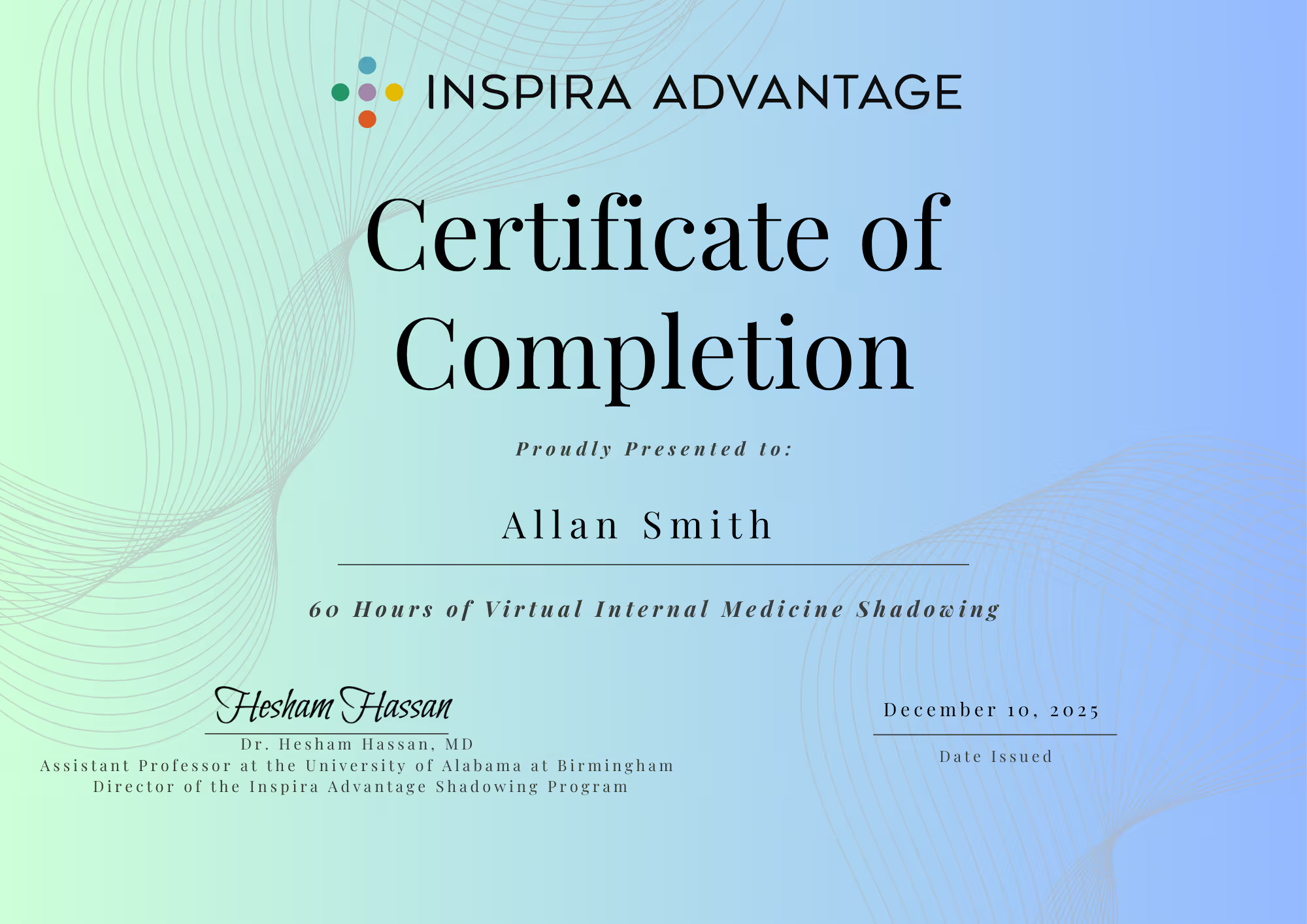
Receive a Certificate Of Completion
Upon successful completion of the program, participants will receive a verified digital certificate of completion from Dr. Hesham Hassan, Program Director of the Internal Medicine Shadowing Program.











Rohit was a sophomore who struggled to find in-person clinical opportunities. He dreamt of attending an Ivy League medical school and reached out to Inspira Advantage to help make it happen.
Rohit was admitted to 19 of the 30 med schools to which he applied, including two Ivy League medical schools! He chose to attend Harvard Medical School.
.avif)
As a freshman at the University of Maryland, Anthony struggled to find in-person clinical experiences to start building his pre-med profile. He wanted an expert’s support to ensure he would be a competitive candidate when the time came to apply to medical school.
Anthony was admitted to 17 of the 30 med schools to which he applied. He chose to attend Yale University School of Medicine!







Begin the program with a foundational introduction to internal medicine, focusing on how internists think, what they treat, and why building strong, empathetic connections with patients is essential to providing excellent care across every specialty area.
Dive into hematology and discover how internists recognize, evaluate, and interpret common blood disorders, using diagnostic reasoning to connect symptoms, lab results, and patient history to arrive at an accurate differential diagnosis.
Explore the field of cardiology and learn how internal medicine physicians assess cardiovascular symptoms, interpret key clinical findings, and develop a thoughtful approach to diagnosing and managing common heart and vascular conditions.
Learn about pulmonology and see how internists evaluate lung and breathing concerns, from shortness of breath to chronic respiratory issues, while building a step-by-step plan that connects physical exam findings, imaging, and pulmonary testing.
Take a closer look at gastroenterology within internal medicine and learn how physicians manage both acute presentations and chronic gastrointestinal conditions, including how they identify red flags, choose appropriate testing, and build practical treatment plans.
Explore the field of nephrology and learn how internal medicine physicians approach diagnosing and managing common kidney diseases, with an emphasis on interpreting renal labs, understanding fluid and electrolyte balance, and guiding long-term patient care.
Learn about endocrinology in internal medicine and how internists diagnose and treat patients with chronic endocrine conditions, including how they monitor disease progression, adjust treatment over time, and support patients with sustainable lifestyle-based strategies.
Dive into rheumatology’s role in internal medicine and learn how physicians evaluate complex autoimmune and inflammatory conditions, using clinical reasoning to connect systemic symptoms to underlying immune dysfunction and develop long-term management approaches.
Explore how geriatricians approach neurological concerns in older adults, including how they use diagnostic reasoning to differentiate common presentations and how they support patients and families while managing neurodegenerative diseases over time.
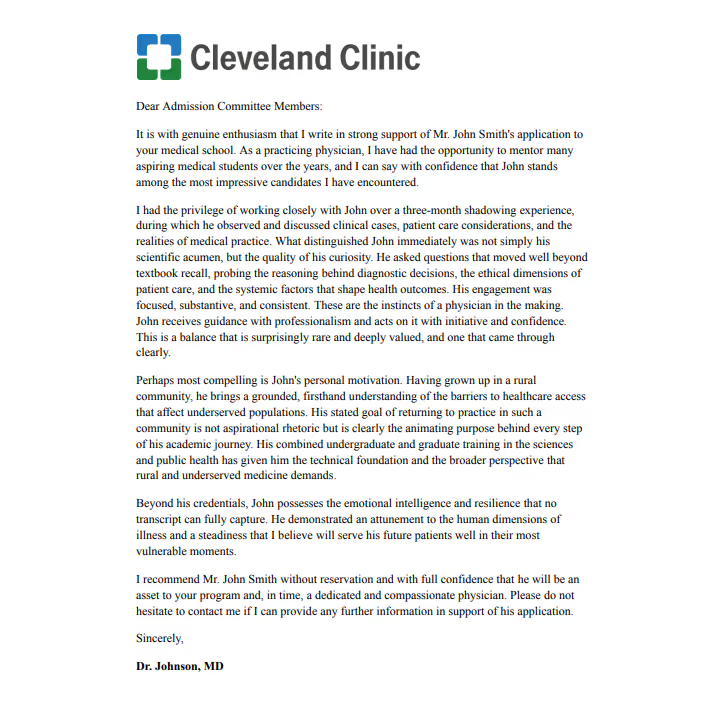
Participate in a live Q&A session with your physician, where you can ask questions about internal medicine, reflect on what you learned, and discuss your tailored recommendation letter for medical school, including strengths to highlight and next steps to stay competitive.







.svg)

