







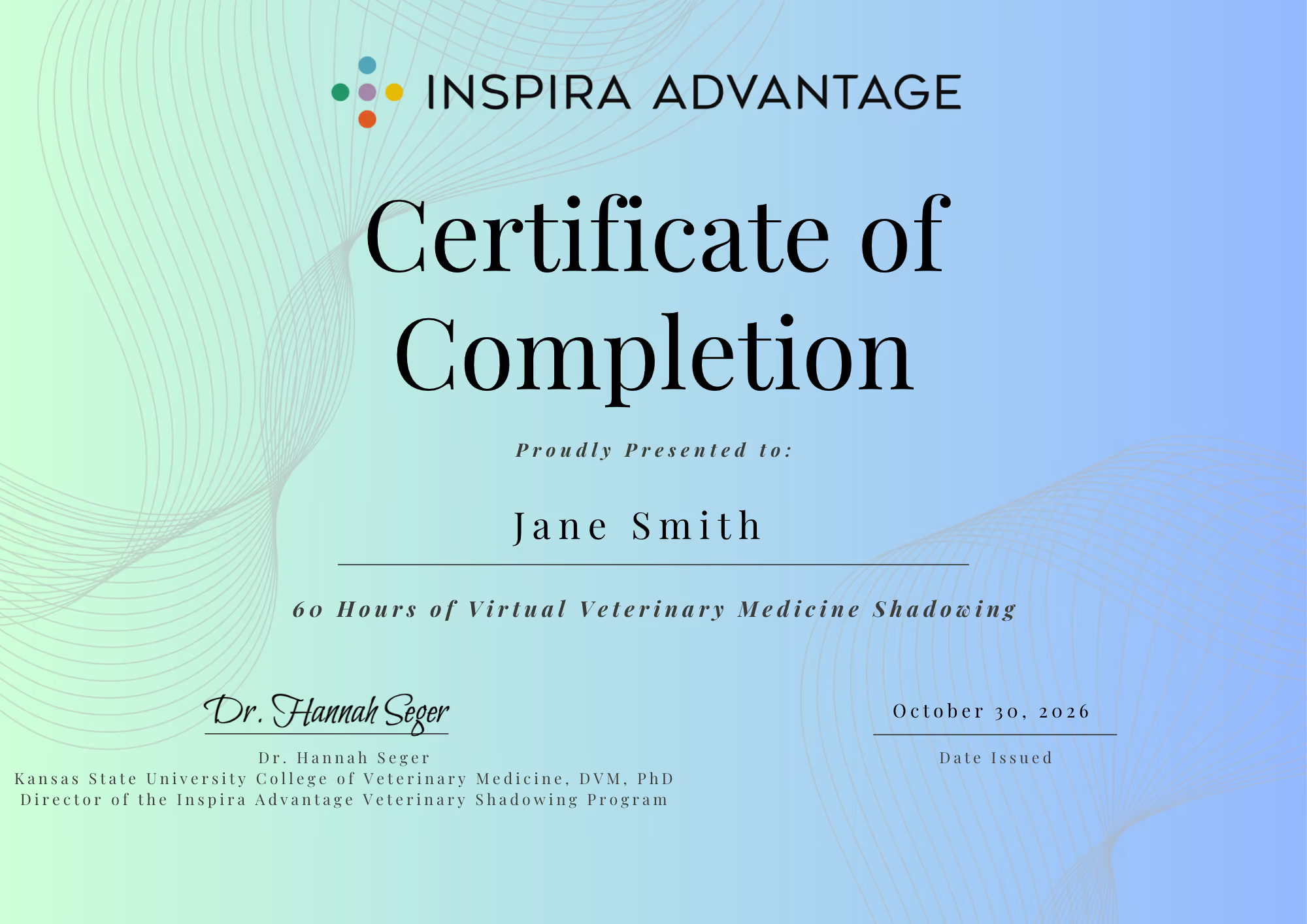
An Official Certificate of Completion
Once you've successfully completed the program, you'll receive a digital Certificate of Completion confirming your 60 hours of veterinary shadowing experience.















Begin with an introduction to veterinary medicine, exploring what general practice veterinarians do, where they practice, and how they reason through cases when the patient cannot speak, while building the client communication skills that are essential to delivering excellent care.
Dive into cardiology and learn how veterinarians evaluate a coughing dog with a heart murmur, build a differential diagnosis from history and exam findings, and navigate the balance between diagnostic certainty and a client’s financial realities.
Explore gastroenterology, one of the most common reasons pets visit a general practice, and discover how veterinarians work up a vomiting cat, distinguish minor stomach upset from serious disease, and more.
Learn how veterinarians approach respiratory cases in dogs, from listening to the lungs and interpreting radiographs to separating common causes of coughing and recognizing signs of emergencies.
Take a closer look at urinary and renal medicine and understand why a straining cat can be a life-threatening emergency, how veterinarians diagnose urinary blockages and kidney disease, and how to guide a client through difficult decisions when the cost of treatment is high.
Explore endocrinology through the case of a diabetic dog, including how veterinarians recognize and diagnose diabetes, what lifelong management involves, and how to support clients who are unsure whether they can commit to ongoing care.
Dive into dermatology, one of the highest-volume complaints in general practice, and learn how veterinarians evaluate an itchy, overgrooming cat, sort between fleas, allergies, and behavioral causes, and set realistic expectations for condition management.
Discover what else walks into a general practice by exploring exotic and “pocket pets,” how veterinarians approach a patient like a rabbit, and how to recognize the limits of their scope.
Explore how veterinarians recognize and manage common emergencies, including bloat, deciding when to stabilize versus refer, triaging under time pressure, and helping clients make urgent treatment decisions.
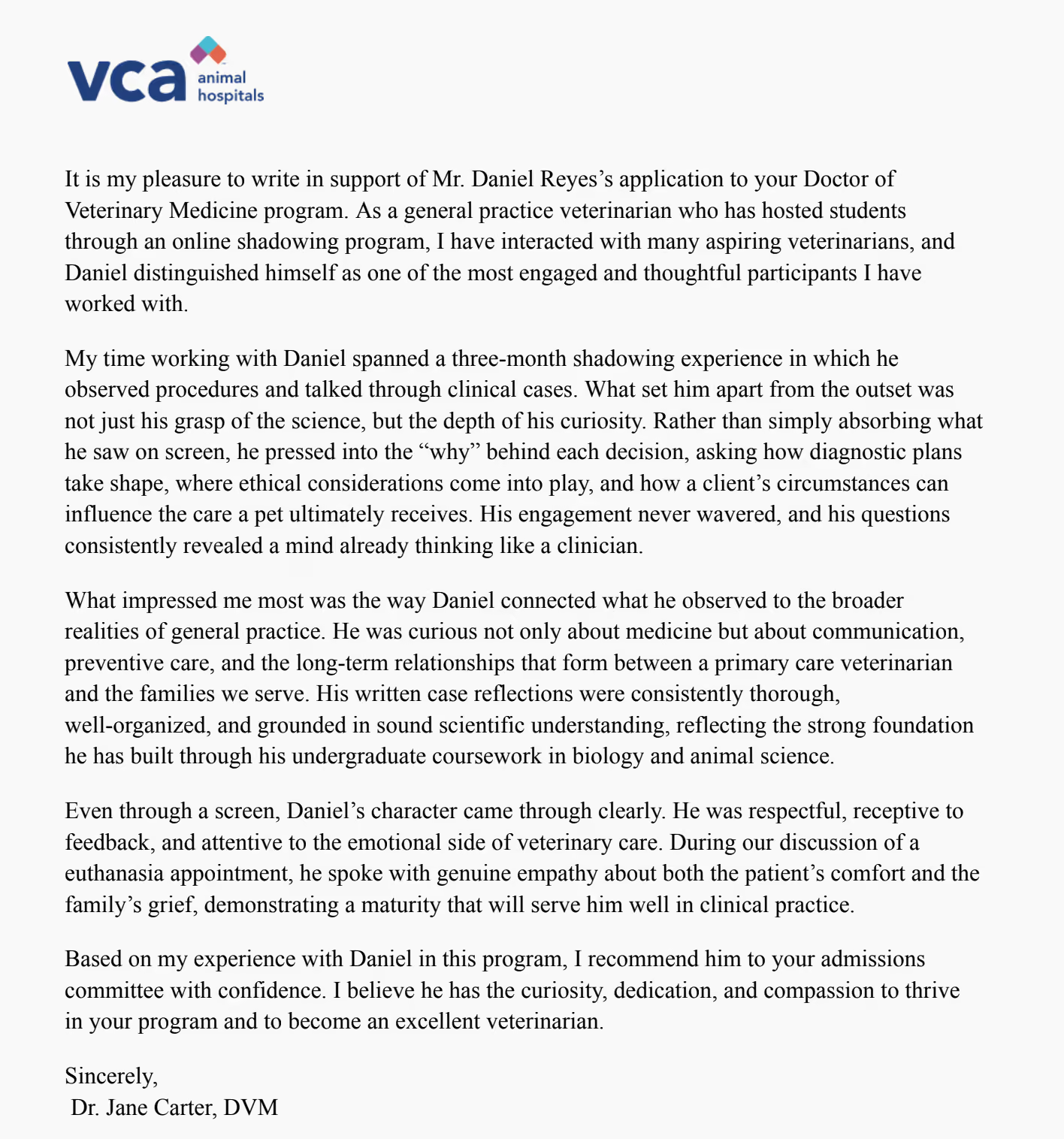
Participate in a live Q&A with your veterinarian, where you can ask anything about the field, reflect on what you’ve learned, and discuss your letter of recommendation for vet school, including personal strengths to highlight and next steps to stay competitive.


