Get in touch: +1 888 453 5021


Undergrad: US Air Force Academy
Graduate School: University of Maryland, College Park, University of North Carolina
Dental School: Rutgers School of Dental Medicine
Orthodontics, Biochemistry, Bioengineering, Biomedical Engineering, Chemical Engineering, Chemistry, Health Policy & Health Economics, Health Services & Outcomes Research, Physiology, Integrative Biology, Systems Biology, Quantitative Biology, Biomedical Informatics, Clinical Informatics, Data Science
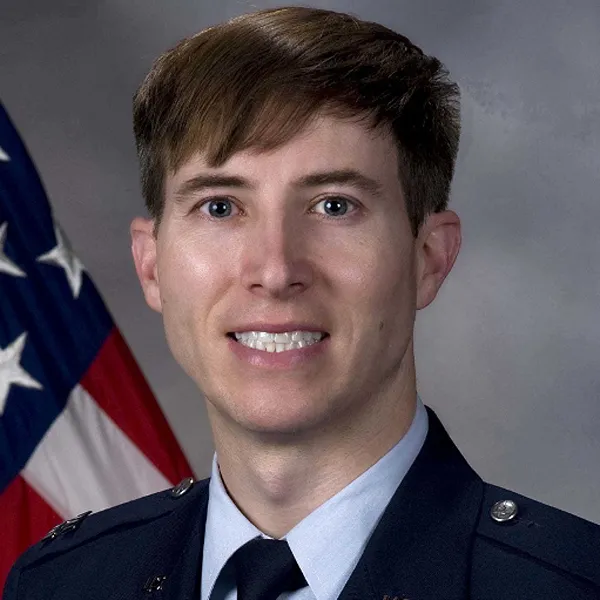
Dr. Pastewait worked as a chemist for the Air Force Research Laboratory for four years, where he developed rocket propellant.
Dr. Pastewait is a Distinguished Graduate from the US Air Force Academy, graduating as the top cadet in the field of chemistry. He earned his first Master’s degree from the University of Maryland in College Park. Upon graduation, Dr. Pastewait worked as a chemist for the Air Force Research Laboratory for four years. In this role, he conducted research on the synthesis, characterization, and testing of rocket propellant. In the field of computational chemistry, he used advanced software to design and characterize energetic materials for chemical propulsion systems, and in physical chemistry, he designed experiments to investigate new propulsion applications for next-generation liquid propellants—his research was published in the Journal of Physical Chemistry. He also deployed to Southwest Asia multiple times in support of Operations Enduring Freedom and Iraqi Freedom.
Upon his return, Dr. Pastewait entered the Rutgers School of Dental Medicine on the Health Professions Scholarship Program. At this time, he began mentoring and tutoring other dental students in both didactic and clinical courses. He was inducted into the Omicron Kappa Upsilon dental honor society.
After graduation, Dr. Pastewait worked as a general dentist for three years before applying for an orthodontic residency. While attending the UNC Adams School of Dentistry Orthodontic program, Dr. Pastewait conducted research on cleft lip and palate patients using artificial intelligence software. His team analyzed cone beam CT images to investigate various defect factors. He also used artificial intelligence to develop an automated method for tooth labelling and landmark identification on intraoral scans. Furthermore, he co-authored two chapters of the textbook Machine Learning in Dentistry.
His education and mentorship skills were further honed when he became the Orthodontic Course Director for an AEGD-1 program. Using his previous research and admissions committee experience, Dr. Pastewait helped residents with their research projects and poster presentations. They performed research in multiple areas, including third molar treatment modalities, the health risks of electronic cigarettes, and advanced pediatric dentistry techniques. He also served as an interviewer and selection committee member for the US Air Force AEGD-1 Program and the Health Professions Scholarship Program.
Dr. Pastewait has experience guiding students in research across biochemistry, biomedical engineering, chemistry, health policy and economics, health services, biomedical and clinical informatics, and data science. Students he has worked with have been accepted to top dental schools, including Rutgers University, Columbia University, the University of Colorado, Midwestern University, Lincoln Memorial University, Medical University of South Carolina, Indiana University, New York University, and the University of Southern California.
As a research mentor, Dr. Pastewait draws upon his extensive research, education, and clinical experience to guide prospective healthcare professionals throughout the research and publication process.

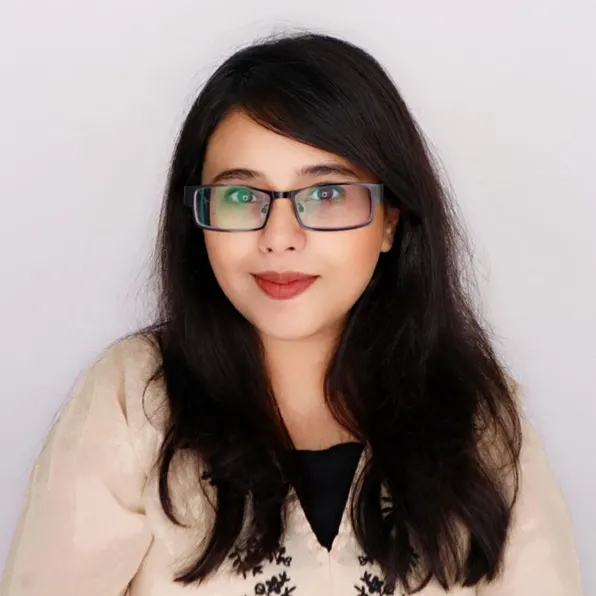
Dr. Shahab is one of the few researchers who can perform a high-stakes craniotomy in the morning and debug a Python-based Bayesian optimization script in the afternoon. She loves working at the 'wet-ware' to 'software' interface, ensuring that the AI’s predictions aren't just mathematically sound, but biologically grounded.
Pharmacology, Biochemistry, Bioengineering, Biomedical Engineering, Biostatistics, Cancer Biology, Tumor Biology, Cell Biology, Genomics, Molecular Biology, Neuroscience, Pharmacology, Physiology, Integrative Biology, Biomedical Informatics, Clinical Informatics, Data Science
Undergrad: West Bengal University of Technology
Graduate School: Wayne State University
Dr. Shahab began her academic training at West Bengal University of Technology, where she earned a Bachelor’s of Technology in biotechnology and bioinformatics. She then completed a Master’s degree in molecular biotechnology at Wayne State University and was awarded the Interdisciplinary Bioscience Fellowship through the Wayne State University School of Medicine. Throughout graduate training, she also received additional recognition, including the Rumble Fellowship and a Wayne State University Publication Award, and she later earned a University of Michigan Professional Development Award.
During her PhD training, Dr. Shahab independently led a five-year research program focusing on the mechanisms of cisplatin-induced ototoxicity. Bridging the gap between traditional wet-lab research and modern computational engineering, she recently completed a prestigious Applied Machine Learning certification at Columbia University, mastering neural networks, deep learning, and data visualization. A prolific researcher and leader, Dr. Shahab was a key contributor to a $1.7M National Institutes of Health grant. Recognized as an invited peer reviewer for Nature Portfolio —Communications Biology and Frontiers in Pharmacology, Dr. Shahab is dedicated to accelerating scientific discovery through reliable, interpretable, and safe AI systems.
Dr. Shahab has established a distinguished career at top-tier institutions, including the University of Michigan, Memorial Sloan Kettering Cancer Center, and Wayne State University. She has worked as a graduate research assistant and undergraduate mentor for Wayne State University’s Department of Pharmacology, as a research scholar in translational oncology at Memorial Sloan Kettering Cancer Center, and as a postdoctoral researcher and lecturer at the University of Michigan. Dr. Shahab has authored six peer-reviewed publications, with her work appearing in Hearing Research, Molecular Neurobiology, Toxicology and Applied Pharmacology, and other publications.
As a postdoctoral researcher at the University of Michigan, Dr. Shahab serves as a critical bridge between biological domain expertise and machine learning objectives. She has pioneered the implementation of real-time Bayesian optimization frameworks to map high-dimensional neural response spaces, achieving a 95% reduction in experimental iteration time while ensuring outputs remain biologically sound. Her previous tenure at Memorial Sloan Kettering Cancer Center involved integrating multi-omics data and real-world evidence (RWE) to identify therapeutic targets for soft tissue sarcomas, specifically desmoid-type fibromatosis.
With 10 years of mentorship experience, Dr. Shahab has mentored 250+ students in research spanning biochemistry, bioengineering, cancer biology, computational biology, genetics, neuroscience, pharmacology, data science, and many other disciplines. Students she has mentored have been accepted to programs including Wayne State University, Michigan State, the University of Michigan Medical School, Rockefeller University, Johns Hopkins University, Rutgers University, and the University of California, Santa Barbara.
Dr. Shahab is known for her structured, supportive guidance. She has consistently mentored undergraduates and summer research students across her academic and clinical research roles, helping trainees build skills in study design, literature gap analysis, data interpretation, and scientific communication.
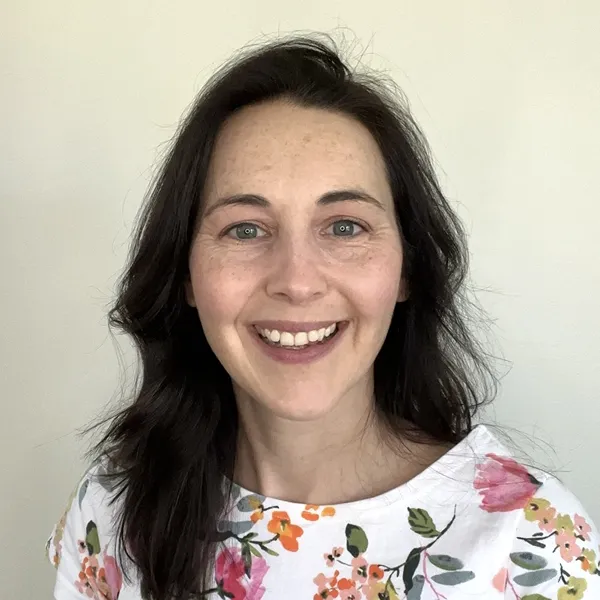
Undergrad: Nova Southeastern University
Graduate School: King’s College London, Dartmouth College
Cancer Biology, Tumor Biology, Cell Biology, Immunology
Dr. Vella loves baking macarons and experimenting with unexpected flavor combinations.
Dr. Vella began her academic training at Nova Southeastern University, where she earned a BS in biology. She then completed an MS in biomedical sciences at King’s College London. Throughout her academic research career, Dr. Vella has led projects involving immune imaging, gene expression profiling, and the development of novel experimental protocols, work that has been supported by multiple grant and fellowship programs. Her research has been published in prestigious journals such as Cancer Research, the Journal of General Virology, the Journal of Immunology, and others.
Professionally, Dr. Vella has built experience across academia, early-stage biotech, and venture-backed therapeutics. She served as Senior Associate and then Associate Director of Business & Alliance Management at Orange Grove Bio, where she led due diligence and partnership strategy across cell therapy, immunology, and oncology assets. She is currently a Co-Founder at ACATbio, a preclinical-stage company focused on novel immunomodulatory therapies, where she oversees research and development strategy, investor communications, and funding initiatives across both grant and venture channels.
Mentorship has been a consistent focus throughout Dr. Vella’s career. Beginning as a research associate at the University of Miami and continuing through her graduate and postdoctoral years at Dartmouth College, she has trained and mentored undergraduate researchers in the lab, supporting students as they develop research skills and grow into confident scientists. At Dartmouth, she also served as an Entrepreneur-in-Residence, advising academic spinouts on commercial strategy and mentoring trainees through translational accelerator programs.
Many of the students Dr. Vella has coached have completed honors theses, presented at conferences, and pursued advanced degrees in science and medicine. Dr. Vella has supported students through research spanning cancer biology, tumor biology, cell biology, and immunology.
Dr. Vella’s mentorship style bridges scientific rigor with strategic clarity. She supports students through every step of the research process, from question formulation and literature review to data interpretation and manuscript development. Her approach is structured, encouraging, and tailored to each student’s interests and goals. She is particularly excited to help students connect their research work to larger scientific narratives, clinical challenges, or societal needs. Whether guiding students toward their first abstract or helping them build confidence as future physicians and investigators, Dr. Vella values mentorship as a means of cultivating scientific curiosity and clarity of purpose.
Lisa had a competitive GPA, solid DAT prep underway, and plenty of shadowing hours with practicing dentists, but lacked research experience. She worried that her pre-dental profile wouldn’t stand out, and wanted to show admissions committees intellectual depth beyond her clinical experiences.

Lisa submitted her paper to several selective undergraduate journals, earned a recommendation letter from her mentor, and walked away with a working understanding of research methods and scientific reasoning that she could speak about in her dental school application and interviews.
Jalen had spent over a year assisting in a biomechanics lab and had been listed as a contributing author on two publications. However, his name appeared far down the list. Jalen longed to have a research project published with him as a first author before applying to dental school.
Jalen finished his first-author paper and submitted it to three selective undergraduate journals. He also received a recommendation letter from his research mentor that tied together his lab experience and new independent work into a narrative demonstrating his drive and commitment to research.
Nina reached out to Inspira Advantage about three months before AADSAS opened, hoping to add research to her profile before it was too late. She was worried about her candidacy and knew that research experience could add more depth to her profile.
Nina completed her research paper during the admissions cycle and sent update letters showing her current activities to the schools she applied to. She also submitted her paper to two selective journals with her mentor’s publication guidance.




.svg)

