Residents participate in the UCLA Health System Craniofacial Team, which diagnoses and treats patients with developmental abnormalities in the UCLA Craniofacial Clinic. With only four residents per cohort, the faculty-to-resident ratio enables exceptionally close mentorship across the full three-year program.
The curriculum includes an extensive practice management seminar series that features a practicum to visit private orthodontic offices in California, blending critical-thinking-focused treatment planning with real-world practice exposure that few other programs offer.
Residents receive extensive clinical training in interdisciplinary care spanning prosthodontics, periodontics, oral and maxillofacial surgery, craniofacial anomalies, temporomandibular joint disorders, and orofacial pain, with access to UCSF's oral surgery department and one of only a few clinics that treat cleft palates.
Clinical experiences include rotations at the Orthodontic and Dentofacial clinics at the College of Dentistry, as well as at the Craniofacial Anomalies Clinic at Nationwide Children's Hospital, providing residents with a direct pediatric craniofacial caseload within a university medical center. The 33-month timeline allows residents to complete active treatment for roughly 80% of their patients.
The department was founded in 1929 and has graduated over 600 orthodontists, continuing the legacy of legends like Downs, Brodie, Ricketts, and Haas. With nine residents per cohort and Chicago's large, diverse patient population, the program delivers one of the highest case volumes and broadest case mixes in the country.
The department's multidisciplinary faculty are educationally qualified in anatomy, physiology, biomechanics, mechanical engineering, epidemiology, medical genetics, physics, and the management of temporomandibular disorders, and teach multiple clinical techniques, including lingual appliances, segmented arch mechanics, and dedicated implant anchorage.
The program provides clinical care and support for two ACPA-approved craniofacial centers (Children's Hospital at Montefiore, Einstein, and Icahn School of Medicine at Mount Sinai Hospital), and residents average 90-100 case starts plus 40-60 transfer cases, with interdisciplinary exposure to oral surgery, plastic surgery, ENT, and sleep medicine.
Over 300 orthodontists have received their training within the department since 1961, backed by one of the strongest alumni networks in the country (the Gaylord Alumni Association), and over 20 highly experienced part-time clinical facultysupplement the full-time faculty.
Since 1955, treating patients with birth defects has been a cornerstone of the Eastman Dental curriculum and clinical experience, and the two-year certificate program can be combined with an MS or PhD through the University of Rochester, allowing residents to tailor the program to a private-practice or academic career track.
One of the program's guiding principles is to train residents for how they will practice in the future rather than to emphasize how orthodontics was practiced in the past, applying the latest technologies such as CBCT scans, digital models and charts, computer-aided treatment planning, TADs, and soft-tissue lasers.Second-year residents manage a patient load of about 150 cases, building serious clinical volume in just 24 months.
10 Best Oral and Maxillofacial Surgery Residency Programs
Here are the 10 best oral and maxillofacial surgery (OMFS) residency programs.
Oral and Maxillofacial Surgery Residency Program
Our Ranking
Program Size
Program Length
Year 1 Residency Stipend
Why It's a Great Place to Match for Oral and Maxillofacial Surgery
The program has graduated 235 specialists, including 39 former or current chairs, program directors, and dental school deans. Residents rotate across Parkland Health, UT Southwestern University Hospitals, Dallas VA, JPS Health Care System, and Children's Health, with five accredited positions per year, giving UT Southwestern the largest 6-year OMFS cohort and broadest multi-hospital surgical exposure among elite programs.
With nine full-time faculty, including six fellowship-trained faculty, Michigan has one of the largest maxillofacial surgery teams in the country. As part of a national and international destination care center, residents see conditions they won't get the chance to treat elsewhere, including multidisciplinary programs in craniofacial anomalies, sleep disorders, and head and neck cancer.
Residents achieve clinical experience across six affiliate teaching sites. The program offers a combined residency/PhD option, and its research labs focus on pain science, tissue engineering, and maxillofacial reconstruction.
Six staff surgeons, three advanced practice providers, and 12 residents perform about 1,000 hospital surgeries each year, with OMS operating two dedicated operating rooms at the Saint Mary's campus every day of the week. Since 1990, the program has boasted a 100% pass rate for residents who have taken the American Board of Oral and Maxillofacial Surgery certification, and senior residents typically travel with a surgeon on a one-week international mission trip treating cleft patients in underserved areas, with all costs covered by the program.
UAB is the only Level 1 ACS Trauma Center in Alabama and receives about 6,500 trauma activations per year, making it one of the nation's busiest trauma centers. UAB also uniquely offers a "reverse-track" pathway for medical school graduates to enter OMS.
Harborview Medical Center's Trauma Center has the region's best emergency trauma facilities, and each resident spends at least 9 months there, with trauma surgery comprising the majority of oral and maxillofacial procedures. Residents receive clinical and operative training at six hospitals serving a four-state catchment area that funnels the most severe facial trauma directly to the OMFS service.
The program includes three years on the Oral and Maxillofacial Surgery Service, two years as a full-time medical student, and one year on the General Surgery Service. Faculty research programs are funded primarily through the National Institutes of Health, and UCLA offers optional year-long research fellowships, MS programs, and PhD programs for residents pursuing academic careers.
The program is among the largest in the nation, supported by 14 full-time faculty across six divisions and seven institutions within the Texas Medical Center. That dual-track structure, combined with rotational access to the world's largest medical complex, gives residents unmatched flexibility and subspecialty exposure.
The LSU Comprehensive Review Course in Oral and Maxillofacial Surgery has educated nearly 50% of all OMS in America, preparing them for board examinations and certification over the past 50 years. Residents receive full training in all aspects of maxillofacial surgery, including microvascular reconstruction and facial cosmetic surgery, with dedicated cosmetic rotations under board-certified facial cosmetic surgeons built directly into the curriculum.
The department has interdisciplinary partnerships with ENT (including head and neck microvascular surgeons), sleep medicine, anesthesia, neurosurgery, general surgery, trauma, emergency medicine, and hospital dentistry, all under one hospital. Residents care for complex head and neck cancer patients and participate in microvascular reconstruction during rotations with otolaryngology, as well as oral and maxillofacial surgery.
10 Best Endodontics Residency Programs
Below are our top 10 best endodontics residency programs.
Each resident has their own fully equipped operatory, and a dental operating microscope is provided, with no tuition charged for the certificate program. Residents have access to all dental, medical, and specialty resources of Augusta University, the state's largest training facility for healthcare professionals, making it an exceptionally well-resourced program with minimal financial burden.
The program has offered fully accredited advanced education in endodontics since 1970, and residents rotate through multiple clinical sites, including the VA Hospital in Lincoln, UNMC's Munroe Meyer Institute in Omaha, the GPR program in Omaha, and a surgery rotation at Creighton University.
The combined MSD and Certificate program is the only track available, meaning every resident graduates with both a master's degree and a specialty certificate. Residents effectively interact with various medical and dental specialties to support patients' comprehensive dental needs.
UNC offers a three-year postdoctoral combined dental specialty and MS in Endodontics program that develops specialists with expertise in all aspects of endodontic therapy, including diagnosis of orofacial pain, nonsurgical endodontic treatment, and advanced surgical techniques, while also providing training in both research and educational methodologies.
UConn offers an optional concurrent Master of Dental Science or an interdepartmental PhD in Biomedical Sciences. The School of Dental Medicine is complemented by the School of Medicine and John Dempsey Hospital, and second- and third-year endodontics residents teach once a week, gaining valuable educational experience alongside dental students and AEGD residents.
Hands-on clinical training comprises 50-60% of the program, including surgical and nonsurgical cases, with advanced technology integration such as CBCT 3D imaging and the surgical operating microscope. The program requires approximately 200 cases and 20 surgeries over just two years, and interdisciplinary learning through seminars, case presentations, and collaboration with other dental specialists provides residents with broad clinical exposure at one of the country's top-ranked dental schools.
The program leads to a Master of Science in Dental Sciences with specialization in Endodontics and a Certificate in Endodontics, emphasizing didactic, clinical, and research aspects. The department provides a variety of complex cases, including traumatic injuries and surgical experiences, with a clinic equipped with state-of-the-art microscopes and a cone-beam CT system. Residents also provide community care at off-site locations to broaden their patient base.
The Graduate Program in Endodontics at the University of Minnesota is one of the oldest endodontic programs in the United States, with a long and distinguished history of contributions to the specialty through research efforts and its graduates. A master's thesis is required, and residents are expected to present at the American Association of Endodontists Annual Meeting.
Residents treat complex cases beyond the scope of undergraduate expertise, referring cases from within the college and from regional dentists, and provide treatment to medically compromised patients onsite and in hospital settings. The department has generated numerous research publications over the past decade in the fields of endodontic surgery and materials, and the optional MS in Oral Biology and PhD in Oral and Craniofacial Biomedical Sciences give residents the flexibility to customize their training depth.
Residents are expected to complete 250–300 cases, in addition to 25–35 surgical cases, making this one of the highest clinical volumes of any endodontics residency. All attending endodontists who oversee residents are concurrently private-sector practitioners, affording residents exposure to clinicians with many years of private practice experience, and residents have an opportunity to observe attendings at their private offices. The program was also the first endodontic residency with multiple training sites, including an additional location at the University of Puerto Rico.
10 Best Prosthodontics Residency Programs
Here are our picks for the best prosthodontics residency programs.
Dental Residency Program
Our Ranking
Program Size
Program Length
Year 1 Residency Stipend
Why It's a Great Place to Match for Prosthodontics
Penn's program is the first prosthodontics residency in the nation to begin after the revised accreditation standards were instituted, which recognize digital dentistry and surgical implant placement as integral parts of the specialty. Dental microscopy, maxillofacial prosthodontics, surgical implant planning, placement, and restoration, and full digital dentistry workflow are integrated aspects of the training, and residents rotate at the Hospital of the University of Pennsylvania for maxillofacial prosthetics cases.
The program provides fifteen residents with specialty training with exposure to maxillofacial prosthetics, and residents interface with the Maxillofacial Prosthetics program, helping patients with cancer, trauma, and craniofacial anomalies. UAB's separate CODA-accredited Maxillofacial Prosthetics fellowship means prosthodontic residents get hands-on rotation time with defect cases that most programs cover only in lectures.
Among the prosthodontic faculty, eight are Board Certified and five hold PhDs. The urban setting of UIC provides a large and diverse patient population, and the program's goals include in-depth clinical experience across fixed prosthodontics, removable partial denture prosthodontics, complete denture prosthodontics, implant prosthodontics, maxillofacial prosthetics, and occlusion.
UCSF's prosthodontics program combines advanced study of oral disease with integrated clinical training in restorative dental treatment, and residents learn everything from diagnosis and treatment planning to performing restorative procedures for patients with complex needs.
Residents benefit from the school's proximity to military installations and a large veteran population requiring implant-supported prosthetics, and the faculty includes recognized experts who have written foundational texts in the specialty. The 35-month format provides slightly more clinical time than a standard three-year calendar.
UNC's dual-specialty certificate and master of science degree program requires the successful completion of required coursework, oral or written comprehensive examinations, a research project, and a thesis. The master's degree is conferred by the UNC Graduate School, providing residents with a research credential from one of the top public research universities in the country.
Ohio State integrates advanced technologies, such as digital imaging, digital diagnostic records, and computer-assisted diagnosis, across its specialty programs. The prosthodontics department works in close liaison with the periodontics division, enabling real-time interdisciplinary implant planning and placement rather than sequential handoffs.
As the largest oral health care provider in North Texas, Texas A&M brings care to people in need wherever they need it, and residents treat patients at both the dental school clinic and community-based sites across the Dallas–Fort Worth area. The program offers an optional MS in Oral Biology or PhD in Oral and Craniofacial Biomedical Sciences, and the school's strong alumni network provides mentorship and practice opportunities in one of the fastest-growing dental markets in the country.
Maryland's program has a long-standing reputation for training in removable prosthodontics, and its location within a major academic health center provides residents with exposure to medically complex patients requiring comprehensive oral rehabilitation. The Baltimore campus connects prosthodontic residents directly to the medical school and hospital system, enabling interdisciplinary consultation on cases involving head and neck oncology, trauma, and congenital defects.
Residents are required to manage and treat patients requiring complete dentures, removable partial dentures, fixed partial dentures, and implant restorations, and clinical training in implant dentistry emphasizes all aspects of implant treatment, including implant placement. The program also requires involvement in the treatment of patients with congenital and acquired defects, and residents rotate through the VA Pittsburgh Healthcare System.
10 Best Pediatric Dentistry Residency Programs
Here are the 10 best pediatric dentistry residency programs.
Pediatric Dentistry Residency Program
Our Ranking
Program Size
Program Length
Year 1 Residency Stipend
Why It's a Great Place to Match for Pediatric Dentistry
The Department of Dentistry treats more than 29,000 patients each year, and nearly 60% have at least one special health care need, including autism spectrum disorder, Down syndrome, cerebral palsy, heart disease, bleeding disorders, and childhood cancer. The department's senior staff and house officers serve as members of special patient teams within the hospital, treating patients with cleft lip and palate, other craniofacial anomalies, developmental medicine, or Down syndrome.
The residency is a partnership between Ohio State and Nationwide Children's Hospital, one of the largest freestanding children's hospitals in the United States, and the program is known for its resident research, having captured numerous awards under the guidance of world-renowned pediatric dentistry faculty. The Division has been awarded an HRSA grant to support one resident per incoming class for a combined MS-MPH degree track.
The average graduate completes approximately 110 operating room cases, 30 oral/nasal sedation cases, and 110 IV sedation cases. The Division is part of a nationally recognized Craniofacial Team, caring for children and young adults with abnormalities of the head, face, and mouth, and faculty participate and mentor residents in specialty clinics.
Together with pediatric dentistry community partners, dental teams provide nearly 3,000 treatments under general anesthesia in Children's Colorado's Procedure Center, often in conjunction with other surgical services to coordinate care and minimize costs to families. More than 33,000 infants, children, and teens visit the Dental Center each year, and the program's location on the Anschutz Medical Campus places residents alongside all University of Colorado medical and dental institutions, serving patients from seven mountain states.
Residents spend the first 12 months in Ann Arbor engaged in coursework, patient care, and development of a research project; the second 12 months are mainly spent in advanced clinical training in Flint at Mott Children's Health Center and Hurley Hospital; and the final six months are mainly spent in Ann Arbor completing research, teaching predoctoral students, and advanced clinical activities. Mott Children's Health Center is a technologically advanced multidisciplinary clinic whose services are provided at no cost to families, ensuring the highest quality of care regardless of a family's ability to pay.
The program is hospital-based and offers broad exposure to all relevant components of pediatric dentistry, with the resident having abundant opportunities to provide primary and comprehensive preventive and therapeutic oral health care for infants and children through adolescence, including those with special health care needs. Modern clinical facilities feature digital radiography, paperless charting, and electronic scheduling, and the Bronx's diverse, underserved population delivers a high volume of emergency and trauma cases, helping build clinical confidence quickly across 10 dental sites.
The department's renovated, state-of-the-art graduate clinic has 20 operatories and serves a large, diverse population in the city of Chicago. Residents graduate with significant experience providing care using different modalities of behavior management, including nitrous oxide, moderate sedation (oral and intranasal), and general anesthesia. The program offers a dual Certificate/MS/MPH track in conjunction with the UIC School of Public Health.
UCSF's three-year pediatric dentistry residency gives residents access to the outstanding academic and clinical resources of UCSF Health, UCSF Benioff Children's Hospitals, and affiliated community clinics. The 36-month format provides enough time for both a specialty certificate and a graduate degree in oral and craniofacial sciences, and UCSF's campus devoted solely to health sciences ensures deep interdisciplinary collaboration across medicine, nursing, and pharmacy.
Residents work as part of an interdisciplinary team with other departments at Penn Dental Medicine, the Philadelphia VA Medical Center, and the Hospital of the University of Pennsylvania. Penn's pediatric dental residents rotate through the Children's Hospital of Philadelphia (CHOP) for hospital dentistry and OR sedation training, giving them access to the most complex medically compromised pediatric cases in the region.
Children's National serves as the primary pediatric referral center for the greater Washington, D.C. metro area, including a large military and diplomatic family population that provides consistent, diverse patient volume. The hospital-based program benefits from federal GME funding, and its four residents per class get a high ratio of direct faculty mentorship in a facility with nationally recognized specialties in neuroscience, cardiology, and neonatology.
Methodology We Use to Find the Best Dental Residency Programs in the U.S.
We used program data directly from ADEA PASS and evaluated each program across these criteria:
Institutional affiliation: Programs housed within major academic medical centers, top-ranked children's hospitals, or Level 1 trauma centers give residents access to interdisciplinary teams and medically complex patients that standalone dental clinics rarely see.
Hospital vs. university setting: Hospital-based programs offer access to operating rooms (ORs), trauma exposure, and GME-funded stipends. University-based programs offer stronger research infrastructure and didactic curricula.
Geographic and market advantage: We factored in the cost of living relative to the stipend value, state income tax implications, and whether the program's location offers strong job-placement opportunities for graduates in that specialty.
Clinical training differentiators: We looked for specific features that set one program apart from others in its specialty, such as access to craniofacial centers, in-house digital labs, mandatory research theses, flexible program tracks, or unique patient populations that expand the scope of training.
Every program on our lists earned its spot based on structural and institutional factors that directly affect the quality of your residency experience.
Privacy guaranteed. No spam, ever.
How to Assess Competitiveness and Dental Residency Program Quality
Use ADEA PASS to Compare Dental Residency Programs
Start with ADEA PASS to find the program’s logistics. The database provides information on:
Program size
Program length
Application deadlines
Application start dates
Compare these data points across every program in your specialty before you start narrowing your list.
Larger programs generally offer higher case volume per resident. Longer programs typically include a research or graduate degree component. Neither factor alone makes a program "better," but both shape the type of dentist you'll become.
Compare Dental Residency Stipends
Stipends across dental residencies range from zero to over $70,000 per year, depending on the specialty, institution type, and geographic location. OMFS programs generally pay the highest stipends because residents function as hospital-based surgical trainees on the same pay scale as medical residents.
Orthodontic programs are on the opposite end. Many programs charge tuition and offer no stipend, especially in university-based programs.
Pediatric dentistry, endodontics, and prosthodontics programs fall somewhere in the middle, with hospital-affiliated programs almost always paying more than university-only settings.
Understand the Difference Between a Hospital-Based and a University-Based Dental Residency Program
A program’s environment fundamentally changes what you'll see clinically. For example, hospital-based programs (like those at children's hospitals or major medical centers) expose residents to:
Trauma
Medically complex patients
OR-based procedures at higher rates
University-based programs tend to offer:
Stronger didactic curricula
Research infrastructure
Faculty mentorship
Dual-affiliated programs that combine both settings give you the widest training exposure. Ask during interviews exactly where residents spend their clinical time and how that breakdown shifts across each year of training.
Learn What Happens to Recent Graduates
Find out where recent graduates work. A program that consistently places graduates into competitive associateships, academic faculty positions, or thriving private practices delivers on its training promise.
Ask the program director for a list of graduates from the last five years and their current positions. Programs that produce board-certified specialists who go on to lead practices or publish research are the ones worth prioritizing on your match list.
Privacy guaranteed. No spam, ever.
How Hard Is It to Get Into a Dental Residency?
Getting into a dental residency is harder than most dental students expect. According to the Results of the Matching Program for 2026-2027 Positions from the National Matching Services, 3,213 applicants competed for just 2,272 positions in the 2026 cycle. That left 1,231 applicants unmatched, the second-highest number in five years.
Orthodontics and OMFS Are the Hardest Dental Residencies to Match Into
In 2026, orthodontics had 722 applicants competing for 362 positions. Roughly half of all applicants walked away without a match. Orthodontics added only 3 new positions year over year, while applicant volume jumped by 32.
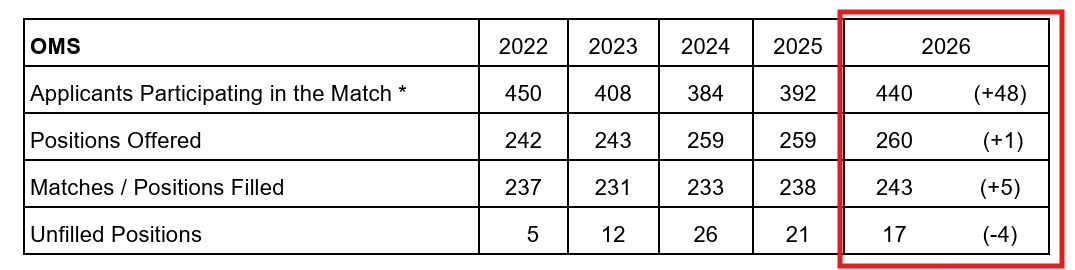
OMFS follows a similar pattern with 440 applicants competing for 260 spots. OMFS filled 243 of those positions, leaving just 17 unfilled. When a specialty fills 93% of its positions, programs can be extremely selective.
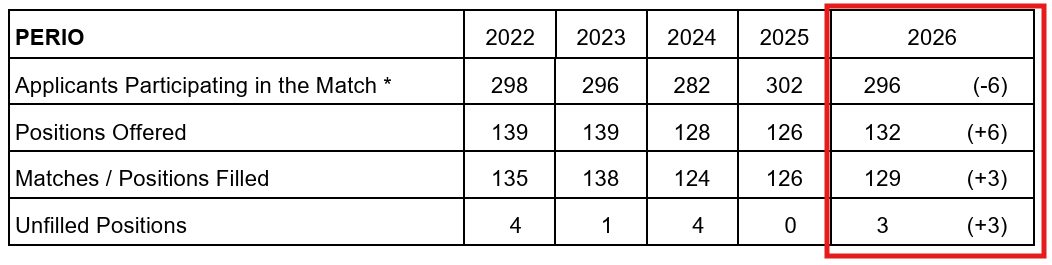
Only 132 Periodontics positions were offered in 2026 for 296 applicants, and just 3 spots went unfilled. Since there are only 49 Periodontics programs, it can be harder to match into than pediatric dentistry despite attracting fewer total applicants.
Where Your Match Odds Are Strongest in Dental Residency Programs
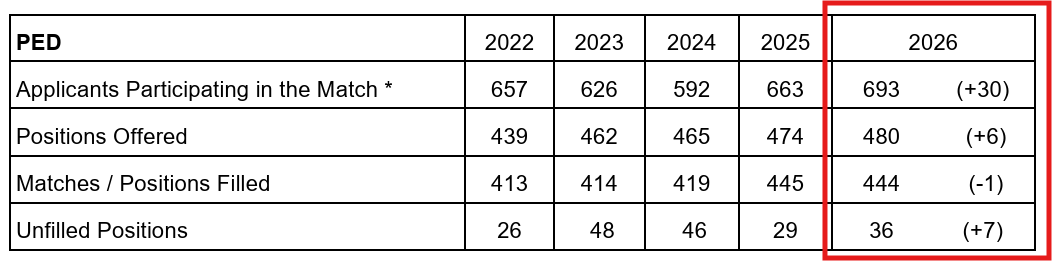
Pediatric dentistry offers the most favorable ratio among the dental specialties. The 2026 cycle had 693 applicants for 480 positions, with 444 filled. Applicant volume is rising, but the number of available positions is growing alongside it.
Prosthodontics is another relatively accessible specialty with 234 applicants for 130 positions in 2026. The applicant pool actually shrank by 27 year over year while positions increased by 3, making 2026 one of the most favorable prosthodontics cycles in recent history.
What the Overall Dental Residency Match Trend Means for Applicants
The total number of positions offered across all dental specialties dropped from 2,516 in 2022 to 2,272 in 2026. Meanwhile, applicant volume rebounded from its 2024 low of 3,066 back up to 3,213 in 2026. This means that more applicants are competing for fewer spots each year.
Apply broadly to residency programs, rank strategically, and have a backup plan. Candidates who treat the match as a numbers game and limit their applications to five or six dream programs are the ones most likely to end up in the unmatched column.
Privacy guaranteed. No spam, ever.
What Is the Difference Between GPR and AEGD Residency Programs?
GPR (General Practice Residency) and AEGD (Advanced Education in General Dentistry) are both one-year postgraduate programs that broaden your clinical skills beyond dental school. Neither leads to a specialty license. Both make you a stronger general dentist. The difference comes down to where you train and what kind of cases you'll see.
How GPR Programs Train General Dentists in a Hospital Setting
GPR programs are hospital-based. You'll rotate through medical departments like anesthesiology, emergency medicine, and internal medicine alongside your dental training. The defining feature of a GPR is operating room access.
Residents manage patients under general anesthesia, treat dental emergencies in the ER, and care for medically complex patients whose conditions make routine dental care anything but routine.
GPR is the right fit if you want to treat patients with significant medical histories, work in a hospital or community health center long-term, or build confidence managing surgical complications. The hospital environment also means you'll develop a comfort level with medical emergencies that most general dentists never get in private practice.
How AEGD Programs Develop Advanced Clinical Skills in a Dental Setting
AEGD programs are clinic-based. Your training takes place at a dental school or a community health center rather than a hospital. The focus is on volume and complexity within the dental chair.
Residents perform advanced restorative work, implant placement, complex extractions, and esthetic procedures at a pace that dental school never allows. AEGD is the right fit if you want to work in private practice with skills that go well beyond what a new graduate typically offers.
You'll graduate placing implants, performing endodontic procedures, and managing full-mouth rehabilitation cases that most associates don't use in their first few years out of school.
How to Decide Between a GPR and an AEGD
Your career goals should drive this decision. Choose a GPR if you want to:
Work with medically complex populations
Pursue a career in hospital dentistry
Need OR experience before applying to OMFS
Choose an AEGD if your goal is private practice and you want to maximize the range of procedures you can offer patients on day one.
GPR programs almost always pay a stipend because they're funded through hospital GME dollars. AEGD programs are more inconsistent with compensation, and some charge tuition. If finances are a factor in your decision, verify the compensation structure before you apply.
Privacy guaranteed. No spam, ever.
How to Get Into the Best Dental Residency Programs
Start Your Specialty-Specific Research by the End of Your First Year of Dental School
Attend your dental school's specialty showcase events and request observership hours in departments that interest you. By your second year of dental school, you should have a faculty mentor in your target specialty who can guide your elective choices, connect you with research opportunities, and eventually write one of your strongest recommendation letters.
Students who wait until their third year to explore specialties are already a full year behind applicants who have built relationships and clinical exposure early.
Publish One Research Project in Your Target Specialty Before Applications Open
Program directors at top residencies scan your CV for evidence that you can design a study, analyze results, and contribute to the field's literature. A case report published in a specialty journal or a poster presented at ADEA carries more weight than listing three "ongoing" projects with no output.
Work with a faculty member who publishes regularly and get your name on a published project before August of your application year.
Complete an Externship at a Program You Want to Match Into
Many dental residency programs offer two- to four-week externships or observerships for third and fourth-year dental students. Showing up in person lets the program director and residents evaluate your clinical aptitude, communication skills, and cultural fit in a way no application packet can convey.
Treat externship days like a working interview. Ask specific questions about case volume, call schedules, and board prep structure. Follow up with a thank-you email to every faculty member who supervised you. Applicants who extern at a program and make a strong first impression are more likely to stand out in residency applications.
Refine Every Personal Statement to the Individual Residency Program
Reference something specific about the program in your personal statement, such as:
A faculty member's research focus
A unique clinical rotation
A patient population that aligns with your career goals
Program directors read hundreds of essays that say, "I've always been passionate about orthodontics." The applicant who explains why a specific program's cleft palate clinic or digital workflow training aligns with their professional trajectory stands out immediately.
Rewriting your statement for each program takes more time, but it demonstrates the kind of intentionality that admissions committees value.
Inspira Advantage can help you match into the perfect dental residency program. Work with our former admissions officers to refine your weaknesses and submit an application that gets you noticed.
Privacy guaranteed. No spam, ever.
FAQs: Top Dental Residencies
What Is the Easiest Dental Specialty to Get Into?
Prosthodontics currently has the best match rates. The 2026 cycle saw 234 applicants for 130 positions, a 27% decrease from the previous year. However, every dental specialty requires a competitive application with strong grades, relevant clinical experience, and solid recommendation letters.
Can International Dentists Apply for U.S. Dental Residencies?
Yes, but the path to residency for international dentists is significantly more complex. Most U.S. dental residency programs require international dental graduates (IDGs) to have completed or be enrolled in an advanced standing program at a CODA-accredited U.S. dental school. You'll need to pass the INBDE, obtain a U.S. dental license, and apply through ADEA PASS just like domestic applicants. Most OMFS programs require USMLE scores in addition to dental board results.
Do You Need a Dental Residency After Dental School?
No. You can legally practice general dentistry with a DDS or DMD degree and a state license. A residency is only required if you want to practice a recognized dental specialty like orthodontics, OMFS, or pediatric dentistry, etc.




.svg)


