Get in touch: +1 888 453 5021




March 25, 2026 New York, NY: A new survey of 66 pre-med and medical students reveals a troubling trend: 86% report experiencing stress or burnout within the past year, with many reconsidering their path to medicine altogether.
The findings highlight mounting pressure across the medical education pipeline before students even reach medical school and point to urgent gaps in institutional support.
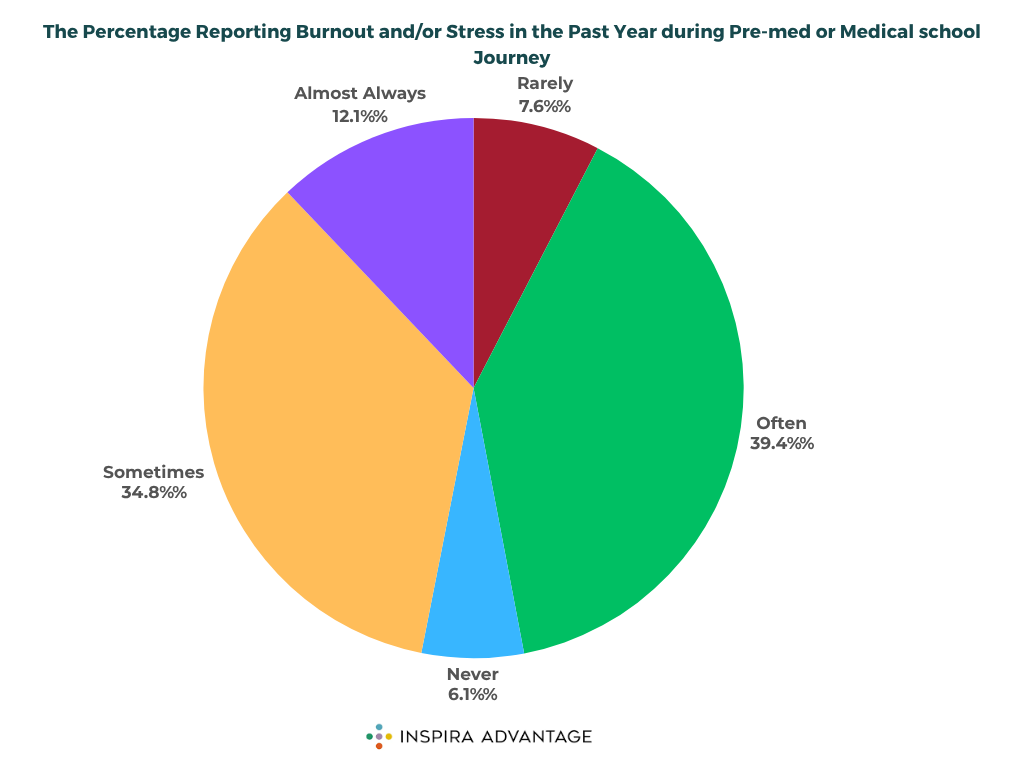
When asked about burnout and stress over the past year:
This means nearly 9 in 10 aspiring doctors are already struggling with mental health challenges, well before entering residency or clinical practice.
Stress isn’t just affecting well-being; it’s influencing career decisions.
A majority of students reported that burnout has led them to consider:
Only 13 out of 66 respondents (20%) said stress had not affected their decisions at all.
This suggests that burnout is actively shrinking the future physician pipeline.
Across responses, three dominant stressors emerged:
1. Academic Workload
Heavy course loads, exams, and performance expectations were the most consistently cited source of stress.
2. Financial Pressure
Medical education costs and the fear of debt were a major concern across all student groups.
3. Lack of Free Time
Students reported limited time for rest, hobbies, and social connections.
Other contributing factors included:
Students reported a wide range of coping strategies, including:
However, many of these methods are passive or short-term, suggesting a lack of structured, institutional support systems.
When asked whether their school provides sufficient mental health resources:
Even more revealing: many students avoid resources due to:
This points to a critical issue: resources may exist, but they aren’t being used effectively.
Students overwhelmingly support a more proactive approach:
This signals a clear shift in expectations from passive support systems to active intervention and monitoring.
When asked about AI-powered mental health tools:
This indicates growing openness to technology-driven solutions, but also skepticism, particularly around replacing human connection.
When asked what would most improve their mental health experience, top responses included:
Notably, structural changes, not just more resources, were the most requested improvements.
A majority of respondents believe their schools take a performative approach to mental health, focusing on policies and messaging rather than meaningful system changes.
This perception highlights a growing trust gap between students and institutions.
Dermatology Resident Physician
The George Washington University School of Medicine and Health Sciences


.svg)

