Get in touch: +1 888 453 5021


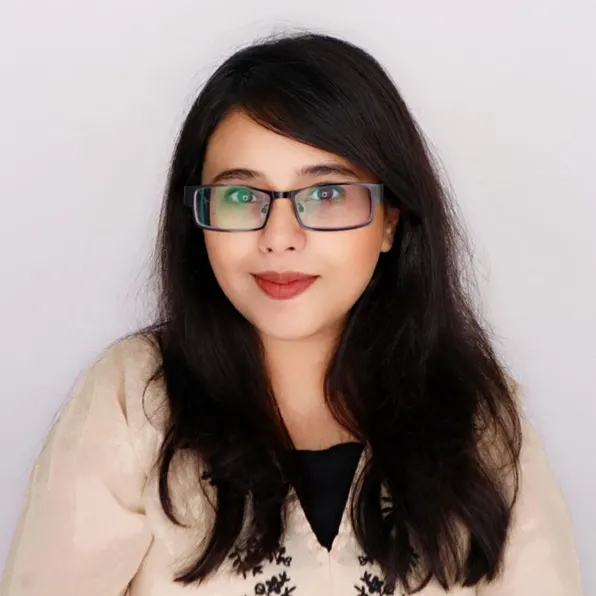
Dr. Shahab is one of the few researchers who can perform a high-stakes craniotomy in the morning and debug a Python-based Bayesian optimization script in the afternoon. She loves working at the 'wet-ware' to 'software' interface, ensuring that the AI’s predictions aren't just mathematically sound, but biologically grounded.
Dr. Shahab began her academic training at West Bengal University of Technology, where she earned a Bachelor’s of Technology in biotechnology and bioinformatics. She then completed a Master’s degree in molecular biotechnology at Wayne State University and was awarded the Interdisciplinary Bioscience Fellowship through the Wayne State University School of Medicine. Throughout graduate training, she also received additional recognition, including the Rumble Fellowship and a Wayne State University Publication Award, and she later earned a University of Michigan Professional Development Award.
During her PhD training, Dr. Shahab independently led a five-year research program focusing on the mechanisms of cisplatin-induced ototoxicity. Bridging the gap between traditional wet-lab research and modern computational engineering, she recently completed a prestigious Applied Machine Learning certification at Columbia University, mastering neural networks, deep learning, and data visualization. A prolific researcher and leader, Dr. Shahab was a key contributor to a $1.7M National Institutes of Health grant. Recognized as an invited peer reviewer for Nature Portfolio —Communications Biology and Frontiers in Pharmacology, Dr. Shahab is dedicated to accelerating scientific discovery through reliable, interpretable, and safe AI systems.
Dr. Shahab has established a distinguished career at top-tier institutions, including the University of Michigan, Memorial Sloan Kettering Cancer Center, and Wayne State University. She has worked as a graduate research assistant and undergraduate mentor for Wayne State University’s Department of Pharmacology, as a research scholar in translational oncology at Memorial Sloan Kettering Cancer Center, and as a postdoctoral researcher and lecturer at the University of Michigan. Dr. Shahab has authored six peer-reviewed publications, with her work appearing in Hearing Research, Molecular Neurobiology, Toxicology and Applied Pharmacology, and other publications.
As a postdoctoral researcher at the University of Michigan, Dr. Shahab serves as a critical bridge between biological domain expertise and machine learning objectives. She has pioneered the implementation of real-time Bayesian optimization frameworks to map high-dimensional neural response spaces, achieving a 95% reduction in experimental iteration time while ensuring outputs remain biologically sound. Her previous tenure at Memorial Sloan Kettering Cancer Center involved integrating multi-omics data and real-world evidence (RWE) to identify therapeutic targets for soft tissue sarcomas, specifically desmoid-type fibromatosis.
With 10 years of mentorship experience, Dr. Shahab has mentored 250+ students in research spanning biochemistry, bioengineering, cancer biology, computational biology, genetics, neuroscience, pharmacology, data science, and many other disciplines. Students she has mentored have been accepted to programs including Wayne State University, Michigan State, the University of Michigan Medical School, Rockefeller University, Johns Hopkins University, Rutgers University, and the University of California, Santa Barbara.
Dr. Shahab is known for her structured, supportive guidance. She has consistently mentored undergraduates and summer research students across her academic and clinical research roles, helping trainees build skills in study design, literature gap analysis, data interpretation, and scientific communication.


.svg)

