Get in touch: +1 888 453 5021





Most students have no idea what an admissions consultant actually does. They just picture someone who reads a personal statement, says "make it more specific," and charges thousands of dollars. I understand the skepticism, because that's exactly what some advisors deliver.
But I founded Inspira Advantage to solve that problem. Each step below walks through what happens when you work with our team, from your first consultation call to the day you enroll in medical school.
No vague promises about "holistic support." No buzzwords about "unlocking your potential." Just the specific process our experts follow, the tools you'll use, and the deliverables you'll walk away with at each stage.
If you're considering working with any admissions specialist, reading this will give you a clear benchmark for what the experience should look like so you can evaluate every option against a standard rather than a sales pitch.
Before you start working with a professional, you need to review each plan. At Inspira, the first step is to speak with an Enrollment Manager during your free 30-minute consultation.
Your Enrollment Manager will learn about your goals, timeline, and challenges before building a personalized advising plan for you.
Here are just a few of the ways we personalize each plan to support you:
Customization is the primary focus of each Inspira Advantage plan. If you want to personalize your plan, just notify your Enrollment Manager.
Inspira Advantage helped Emily get accepted to Noorda College of Osteopathic Medicine. Here’s what she said about working with us throughout the entire process:
“I really felt cared for and that everyone was listening to my specific needs, and was really able to dig deep … to really hone in on the things that I specifically needed help on. I felt like [Inspira Advantage] was able to assist me in those specific areas that were personal for me.”
Take a look at the video below to learn more about Emily’s experience working with us:
Personalization, advisor-to-student ratios, and success rates vary widely across firms. Before you commit, compare the leading medical school admissions consulting services to find the right fit for your goals and budget.
Completing our Student Onboarding Questionnaire helps your admissions expert get to know you better. The answers you provide help our team match you with an application strategist who best fits your needs.

The Student Onboarding Questionnaire covers your academic profile, personal background, and goals, so your experienced reviewer can tailor your plan.
The Application Planning section is where your advisor gets the clearest picture of your standing. You'll share your:
Your admissions expert uses these details to develop a strategy tailored to your specific deadlines and goals from day one.

After you submit your Student Onboarding Questionnaire, your Student Success Manager will send you a welcome email with your advisor matching timeline and tips for working together effectively. Your Student Success Manager is your go-to contact for questions, concerns, and feedback throughout your entire journey.
Kaitlyn, one of our Student Success Managers, breaks down the role and how your Student Success Manager supports you throughout the admissions process.

Your Student Success Manager will match you with your best-fit advisor within two business days based on the information you provided in our questionnaire. Matching factors include your:
Inspira Advantage has the nation’s largest team of former admissions officers. Take a look at just some of our expert team below:
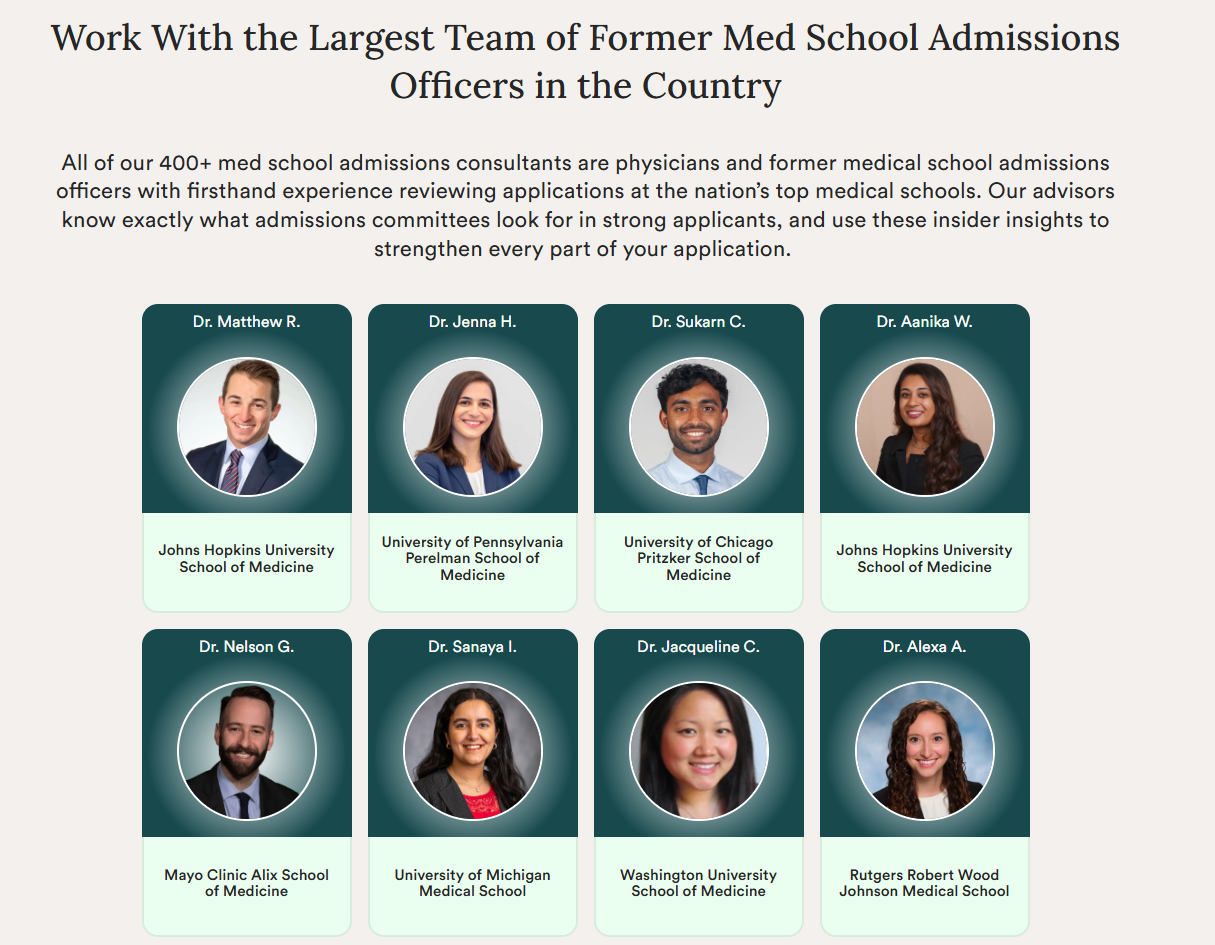
Our admissions experts work with only 3-5 students at a time. Many other consulting firms allow one advisor to manage up to 60 students at once. A smaller ratio means your coach has the bandwidth to learn your story, respond to your questions quickly, and give your application the detailed attention it needs before every deadline.
Once you’re matched with an admissions specialist, they’ll email you to schedule your first call.
You’ll also get your login information for AdvantageOS, our custom online platform for students, parents, and admissions experts. The AdvantageOS home screen, pictured below, lets you chat with your expert, view your personalized admissions timeline, and stay on track to submit the perfect medical school application.

Take a look at the video below to learn how to craft the perfect medical school application:
Your first meeting with your application strategist will help them get to know you better. They’ll ask you questions about yourself to better understand what you need. This introductory call ensures you’ll work together effectively and submit the strongest application possible.
Your first call will cover these key points:
Meeting frequency depends on your application deadline, availability, and how far along you are in the application process. Some students meet weekly during peak submission periods, while others start with biweekly sessions and increase as deadlines approach.
You’ll get as much direct interaction with your coach as you need. We offer unlimited advising hours on any plan you choose.
After your first meeting with your coach, you’ll have access to our custom AdvantageOS platform. This platform has a messaging system that allows you to connect with your former admissions officer, ask questions, and schedule or reschedule your next counseling session.
Here’s an example conversation between an advisor and student via AdvantageOS:

You and your coach will meet to discuss your activities, skills, and most meaningful experiences for the Work and Activities section of the American Medical College Application Service (AMCAS). These calls build on the information you provided in the Onboarding Student Questionnaire.
During these persona assessment calls, your coach will work with you to find your most important experiences, traits, and application narratives. Your advisor will also provide an accurate, honest assessment of your candidacy for medical school.
Sample persona assessment questions your expert might ask include:
Your admissions expert will use the information you provided in your questionnaire and during these calls to draft a comprehensive persona assessment that includes 15-20 key experiences to help you build your AMCAS application.
Juliana came to us worried about her essays. We worked with her to develop a personalized plan to ensure she was accepted to three top medical schools and received a scholarship. Read her review below:
You can read 2,000+ more Inspira Advantage reviews on Trustpilot, RaveCapture, Google, and our website.
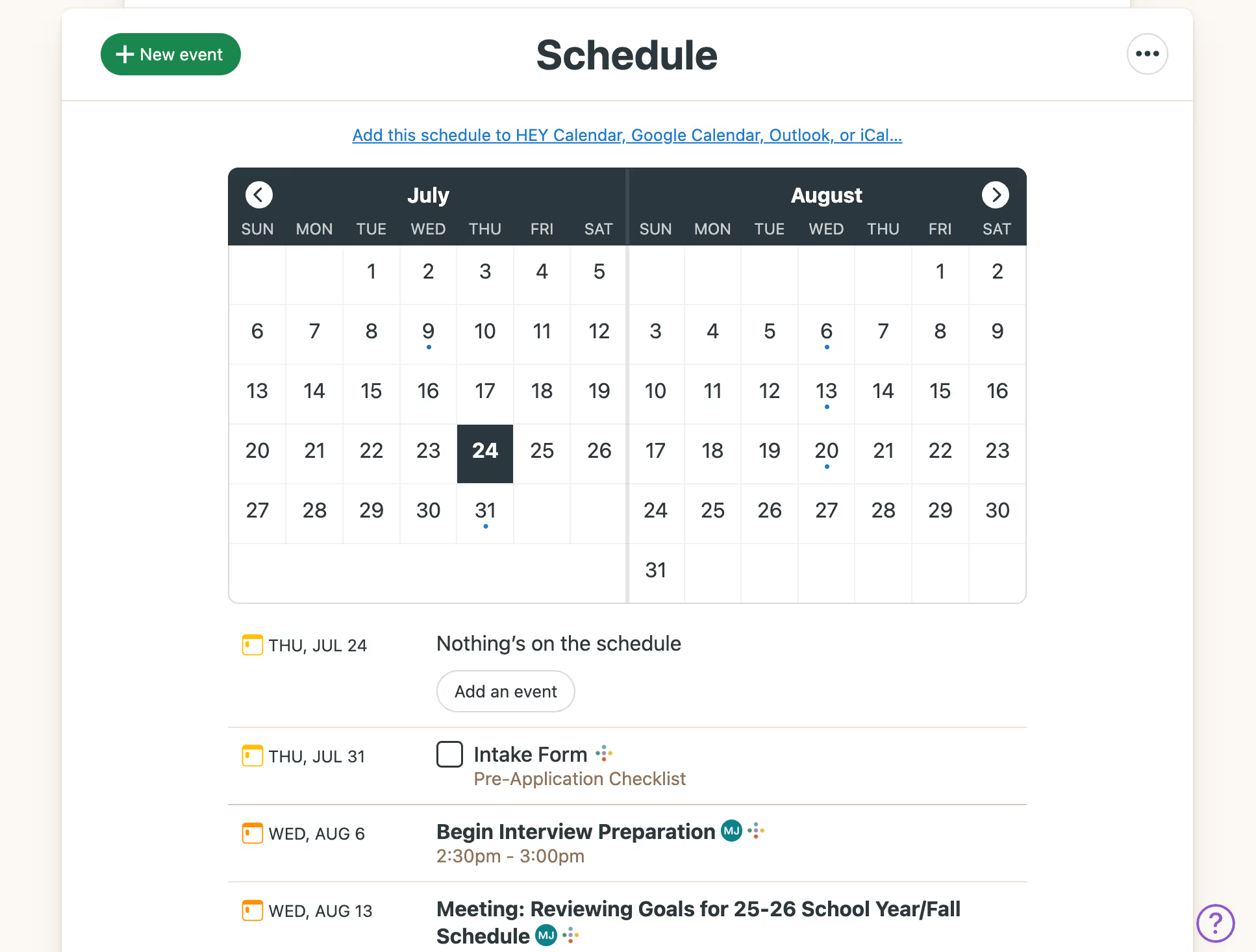
The AdvantageOS platform includes a checklist and calendar to ensure you and your application coach stay up to date on key deadlines, application milestones, and any components you want them to edit.

Your AdvantageOS schedule shows upcoming consulting sessions, action items your advisor has assigned, and application to-dos, such as webinars and deadline reminders. You can see an example of the schedule view in the screenshot below.
We support students applying to medical school through the AMCAS, AACOMAS, and TMDSAS. These are the steps your consultant will support you with as you work toward submitting your primary application.
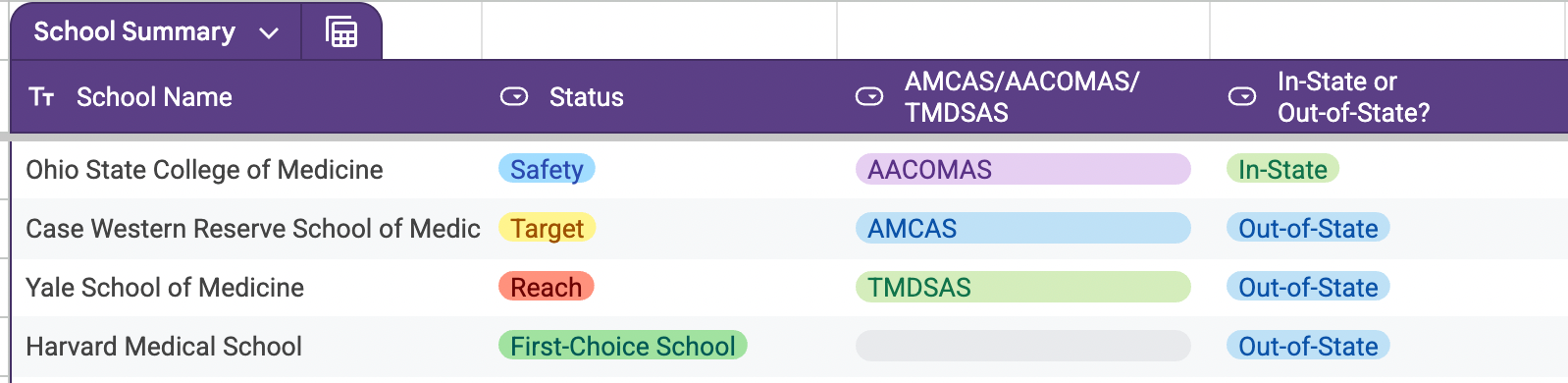
Your admissions expert will work with you to create a balanced medical school list with a mix of target and reach schools. We take your interests, preferences, and competitiveness into account first and foremost when building your school list.
Your application specialist will help you rank schools based on factors like:
Your advisor will balance your list so you're competitive at every school on it. Expect to revisit and adjust your list as your MCAT scores, GPA updates, or new interests shift your priorities throughout the application cycle.
Your expert advisor will help you craft a letter of recommendation strategy to ensure your recommendations are detailed and complement the rest of your primary application.
We help you identify your best recommenders, including science and non-science faculty members, physicians you’ve shadowed, clinical experience or internship supervisors, research advisors, and anyone else who can speak about your character and fit for medical school.
Your advisor will also help you share relevant materials with recommenders, including:
Your application strategist will coach you on how to approach recommenders, including what to say in your email or in-person ask, and how to frame your request to help you get a stronger letter of recommendation. They'll also help you decide between a letter packet, committee letter, or individual recommendations based on what each school on your list prefers.
AMCAS limits each activity description to 700 characters, which is roughly three to four sentences. Your admissions specialist will use insights from your persona assessment calls to help you select the 15 activities that paint the strongest picture of your candidacy and cut anything that overlaps or dilutes your narrative.
From there, your coach will help you write and edit each entry to lead with measurable impact (hours contributed, patients served, funds raised) rather than job descriptions. Admissions committees read thousands of activity lists, so entries that quantify outcomes and connect to your broader application theme stand out far more than generic role summaries.
You’ll work with your application mentor to evaluate each activity based on:
Your consultant will also help you identify your most meaningful activities and develop longer descriptions for them.
Your personal statement goes to every medical school on your list, which means one essay shapes how dozens of admissions committees perceive your candidacy. Getting the narrative right here sets the tone for your entire application.
Your advisor will take the application narrative you developed during persona assessment calls and turn it into a personal statement that admissions committees remember. Here's how the process works:
Most personal statements go through five or more rounds of revision before they're submission-ready. Unlimited personal statement support across all Inspira Advantage plans means your admissions expert reviews every draft without hourly caps or per-revision fees. So you never have to submit before the essay is where it needs to be.
The medical school personal statement editing process is highly personalized. Some students prefer to work asynchronously through the editing process, in which the counselor suggests edits and the student makes changes at separate times. Some students prefer to work with experts in live sessions to review the counselor’s suggestions and make or reject changes. You decide which approach works best for you.
See what two past Inspira Advantage applicants had to say about our approach to personal statement building and editing below:
Students enrolled in our Premier MD plan receive a full application review from an independent panel of three former admissions officers. The panel evaluates your personal statement, activities list, and secondary essays the same way a real admissions committee would, flagging inconsistencies in your narrative, weak points in your positioning, and missed opportunities to strengthen your candidacy.
After the review, your application strategist compiles the panel's feedback into actionable edits you can apply before submitting. Having three additional sets of trained eyes on your application catches mistakes that even a strong initial review can miss.
Students who work with Inspira Advantage secure an average of $35,000 in scholarships. Your advisor helps you secure that funding by identifying merit scholarships you qualify for, drafting essays that align with each award's criteria, and editing every application document before you submit.
Your expert will help you build a scholarship calendar, prioritize awards based on your profile and the strength of your candidacy, and ensure each application reinforces the same narrative running through the rest of your materials.
Scholarship committees respond to the same qualities admissions committees do, so the work you've already done with your advisor translates directly into stronger applications.
The Casper is a situational judgment test many medical schools require. A third- or fourth-quartile score can demonstrate that you have the soft skills necessary to succeed as a physician.
Our programs offer a full-length Casper practice test to help you become familiar with the test. After you finish the mock Casper test, your counselor will grade your answers. They’ll also schedule a 60-minute call with you to provide tailored feedback on each of your answers.
The feedback you receive will help you improve your responses for next time. Your counselor will provide feedback on whether you:
Your application strategist will also help you prepare for the AAMC PREview exam if the schools you want to apply to require it. Your counselor can help you:
Watch the video below to see how Dr. Aditya Khurana, an expert Inspira Advantage counselor and graduate of the Mayo Clinic Alix School of Medicine, provides a comprehensive overview of the Casper test:
Secondary applications are school-specific applications that you must complete after submitting your primary application. Secondary application content can vary, but you’ll typically see at least some of the following components:
Most medical schools send secondary applications within two weeks of receiving your primary application, and each typically includes two to five essay prompts. Applying to 20 schools can mean writing 60 or more essays in a short window, often while juggling work, classes, or MCAT prep.
AdvantageOS includes a card table that tracks every secondary essay across your entire school list, from brainstorming through final review. Your experienced reviewer uses the card table to manage your essay pipeline and keep you both aligned on what's drafted, what's in editing, and what's ready for submission.

Here's how you'll work through each essay:
Most medical schools invite candidates for an interview. Medical school interviews can be offered virtually or in-person, depending on the school.
Interviews are broken down into these common formats:
Your counselor will conduct mock interview simulations to help you prepare for upcoming medical school interviews. These simulations will emulate the interview styles of the schools you applied to, and your counselor will ask school-specific questions to help you feel more confident for interview day.
Your counselor will schedule mock interview sessions in your AdvantageOS account. You’ll see dates, times, and a short session description.

These mock interview simulations allow you to practice answering common and school-specific questions. At the end of these sessions, your consultant provides feedback to help you improve your answers and delivery so you can perform at your best on interview day.
Take a look at what some of our past applicants have said about our interview support:
Submitting your application doesn't end the consulting relationship. Your advisor stays active through every phase that follows, from interview prep to final enrollment decisions.
Strong update letters give admissions committees a reason to revisit your file. Your application advisor will help you draft targeted updates before or after interviews that highlight new developments in your:
An update letter sent too early, with nothing substantial to report, can backfire, so your admissions expert will help you determine when you have enough new material to justify reaching out.
Getting waitlisted at a top-choice school feels like limbo, but how you respond can directly influence the outcome. Your mentor will help you craft a letter of intent to your top-choice program and strategic update letters to any other schools where you're still in consideration. Each letter needs to demonstrate continued interest and add new information, not just restate enthusiasm.
Your consultant will help you compare financial aid packages, weigh differences in location and curriculum, and evaluate which program aligns with your long-term specialty interests and career goals.
Your consultant's job isn't finished when you hit submit. It's finished when you choose where to enroll.
Start working with a med school consultant at least 12-18 months before you plan to submit your primary application. Earlier engagement gives your consultant time to help you strengthen weak areas in your profile, build a school list, and develop your application narrative before deadlines create pressure to rush.
Prepare your cumulative and science GPA, any MCAT scores or planned test dates, a rough list of extracurricular activities, and a general sense of which medical schools interest you. Having these details ready allows your consultant to skip surface-level questions and start building your strategy right from the first call.
A consultant can absolutely help if you're reapplying to medical school. Reapplicants benefit from an outside perspective on what went wrong the first time, whether that's a weak personal statement, an unbalanced school list, or interview performance. Your consultant will help you identify the gaps, reframe your narrative, and present a stronger candidacy the second time around.
A med school consultant can help with every stage of the personal statement process, from brainstorming your narrative angle to final line-level edits. Most applicants struggle not with writing ability but with choosing the right story and connecting it to their candidacy, which is where a consultant's experience across hundreds of applications adds the most value.
Dr. Akhil Katakam was the original author of this article. Snippets of his work may remain.


.svg)


