Get in touch: +1 888 453 5021


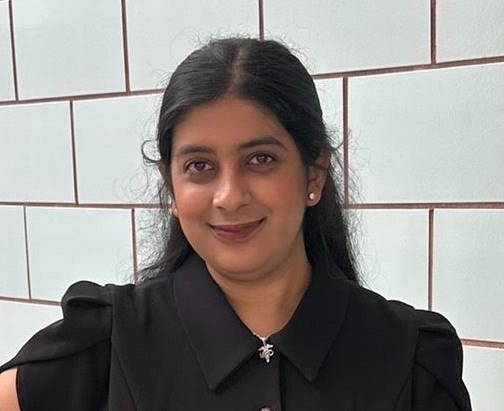
Salina Mansukhani is a pre-medical student at the University of Holy Cross. She has been involved in many projects and opportunities through her clinical experiences in Neurodiagnostic Technology, interest in Emergency Medicine as an ED Tech, and passion for lung cancer advocacy with her research at Massachusetts General Hospital and Harvard Medical School.
My path to medicine has been influenced by moments from my own life where I realized what it felt like to be vulnerable in a healthcare setting - as a daughter, an older sister, and now as someone who works directly with patients. When my sister was diagnosed with juvenile rheumatoid arthritis at a young age, I realized how much I’ve helped her throughout the years understand her body. With the recent sudden loss of my mom, I realized how, as a daughter, being on the other side of a stretcher can feel disorienting and isolating. Medicine is my calling. I want to become the type of physician who brings clarity when everything feels chaotic, who can sit with patients in their hardest moments, and who can provide a comforting presence to patients and families in their most vulnerable state. Those moments made me realize that I want to care for the patients who are overlooked, the ones who don’t always have someone advocating for them, and the ones who may feel invisible in moments when they’re most vulnerable.
Each experience has provided me with a different perspective of patient care, and my blended experience across all three fields has shown me how important it is to be there for vulnerable patient populations. My experience as an intern in neurodiagnostic technology taught me how much can be missed and overlooked if we don’t take a deeper look. A child’s subtle blinking might seem insignificant, but a simple EEG recording can reveal absence seizures and epilepsy that is much deeper than what is seen by the eye. In the emergency department, I cared for a woman in hospice for end‑stage COPD and heart failure. She just looked tired in a way that went beyond her diagnosis. Sitting with her and watching her soften into a small smile reminded me that presence can be a form of care. In rehab, I worked with a woman recovering from a massive stroke who couldn’t speak and rarely had visitors. I’d sit with her after my shifts, and even though she couldn’t respond, she always smiled when I walked in. Her smile taught me that connection requires consistency, patience, and the willingness to be a voice for someone who may not be able to. As a future physician, I want to show up for these patients, especially in fields like neurology and pulmonary/critical care.
What drew me to lung cancer advocacy is the power of early detection to save lives. Lung cancer advocacy matters because it’s one of the clearest examples of how overlooked patient populations can look like. The people who qualify for low dose CT scans to get screened are often the least likely to receive it due to the gap between eligibility and access in addition to the lack of education and awareness about the topic. Just like an EEG can uncover absence seizures that one may not immediately notice, a low‑dose CT scan can catch lung cancer before symptoms ever appear. Speaking at multiple city council meetings about lung cancer screenings made me realize how under‑recognized this issue is. Both in my community and across the US, I saw how preventable late stage-diagnoses can be. As an advocate, it is a meaningful cause for me to be able to make sure that patients with lung cancer increase their chances of survival through early detection!
As a future physician, I want to make sure every patient feels seen, heard, and supported. I’ve seen how easily patients can fall through the cracks due to limited
transportation, low health literacy, decreased access to care, time limitations with jobs, or simply feeling intimidated by the hospital. I want to eliminate these barriers by meeting patients where they are at their level of understanding, their level of comfort, and within the realities of their daily lives. In practice, bridging that gap means slowing down enough to understand any barriers that might be getting in
their way, communicating conditions and treatment plans in a way that brings clarity instead of confusion, and fostering an environment where patients don’t feel invisible. It also means partnering with community spaces people already trust, simplifying steps whenever possible, and advocating for patients when they are at their most vulnerable. Ultimately, I want my patients in the future to feel like they have a physician in their corner who hears their voice and is able to amplify it in a healthcare system that can often feel complex and overwhelming.
I’ve always heard the saying that life is about the journey, not the destination - and this path has taught me how true that really is. At the core of my pre-med journey lies a simple choice: what type of physician do I want to become? When I realized that I am passionate about caring for overlooked populations, choosing meaningful experiences became much easier. As future physicians, we will always be learning - about medicine, about our patients, and about ourselves. The advice I would give to pre-meds is to see this as a lifelong journey rather than a checklist. Once you realize your passion for medicine and ask yourself what each experience has taught you, you will stop chasing activities because they look impressive and start gravitating toward the ones that genuinely teach you something and shape your journey — even if that experience is a simple patient interaction. Being open to a lifelong journey of learning about yourself, your field, and your patients means letting yourself be challenged, admitting when you don’t know something, and choosing opportunities that stretch the way you think about people and medicine. Staying true to your values in your pre-medical years becomes easier when you view every experience as a chance to understand and grow towards the kind of physician you want to become. Pay attention to the moments that stay with you after your shift ends. Find mentors who challenge you. And most importantly don’t lose your personality trying to fit into a mold because there is no single mold as long as you stay true to your authenticity and purpose.
Inspira Advantage is proud to interview pre-medical students like Salina on what drives their passion to pursue medicine.

.svg)

