Get in touch: +1 888 453 5021


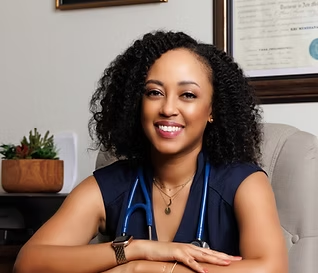
Dr. Kimberly Rogers, MD, DipABLM, DipABOM is the owner of RestoreMD Medical & Wellness
My interest in medicine began with a fascination for the human body and a desire for a meaningful career.
Obtaining strong, personal letters of reference was a significant challenge, especially coming from a large undergraduate institution with limited one-on-one professor interaction. My advice to prospective applicants is to find a mentor who can provide such a reference. My pre-medical experience consisted mainly of volunteer work, like candy striping and working in mental health clinics in Anguilla. Leadership roles, such as being President of the Caribbean Student Association, were more prominent in my application than traditional shadowing or clinical research.
I felt well-prepared for the MCAT due to extensive preparation with review courses.
Yes. Despite my preparation, my MCAT score was average, which was a concern as an international student facing higher admission standards. I lacked confidence in my application and only applied to three medical schools. I received only one interview invitation, from Jefferson Medical College, which led to my acceptance. This taught me that you only need one opportunity to succeed.
I chose internal medicine because I enjoy primary care and addressing the patient as a whole. I pursued further certifications in lifestyle and obesity medicine to better address the root causes of chronic diseases. This allows for a more holistic approach, incorporating nutrition, physical activity, and wellness. The obesity medicine certification, in particular, made me more comfortable with pharmacologic treatments for obesity and deepened my understanding of its complex pathophysiology, which is not extensively covered in standard medical training.
Starting a private practice is increasingly difficult. For primary care in my area of Delaware, the direct primary care (DPC) model with a monthly membership fee was the most viable option due to the financial challenges of the traditional insurance-based model. I would advise anyone considering this path to thoroughly research overhead costs and local reimbursement rates, and to seek mentorship from established practice owners. It took me nine years of post-residency work and about five years of research to launch my own practice, but I have seen others open DPC practices right after residency.
Inspira Advantage is proud to interview experts like Dr. Kimberly Rogers to help future doctors understand the challenges and rewards of a medical career. Learn more about how our experts can help you get into medical school today.

.svg)

