Get in touch: +1 888 453 5021


About Mu Epsilon Delta
Mu Epsilon Delta is a national co-educational, pre-healthcare, professional fraternity whose mission is to prepare its members to succeed in pre-health careers through the development of scholarship, fraternity, and service. We encourage excellence in health science scholarship through promoting a holistic model of healthcare and by fostering cooperation and collaboration between various pre-health disciplines, education, and professionals.
Each year, we poll our nearly 2,000 members from across our 20+ chapters, and we ask them what the most valuable aspect of Mu Epsilon Delta is. Each year, we receive the same answers: Mu Epsilon Delta provides genuine connections, a supportive community, and peer advising. These are priceless benefits that are rarely accessed through other student or professional organizations at universities or elsewhere. In such a rigorous path, forming real connections with people who actively support you, care about your success, and provide you with knowledge and opportunities is the difference-maker that our members rave about. Although our actual professional development events and informational sessions provide amazing insights that students use on their pre-health paths, most members report receiving the best advice from their brothers and sisters outside of events. This is the uplifting community that we offer our members of Mu Epsilon Delta.
One of the biggest pressures faced by pre-health students at my alma mater, UMass Amherst, and other chapters of Mu Epsilon Delta is the pressure to conform to the generic idea of a good applicant. There are strong preconceptions within the pre-healthcare tracks that all applicants should be the same robotic student with good grades and scores, same clinical experiences, hold the same beliefs and ideas about their path, and fit the expectations so closely that they lose sight of their actual goals. I believe that the causes of this issue are shared by both the pre-health students who have laid the expectations and culture at their universities and on social media, and admissions committees at professional schools that seem to select for students with increasingly similar paths and experiences. The idea that twenty-two year-old students are going to always have profound experiences and insights that shape their goals, and that they can share with admissions committees, is a standardized expectation that is oftentimes unrealistic. It saddens me to hear students talk about embellishing and stretching the truth on their applications to fit these expectations that are unfortunately so ingrained in pre-health culture.
I believe that the expectation to get a perfect 4.0 GPA is too heavy because I do not believe that it is an extraordinarily representative metric for who makes a good future medical/dental/PA student or practitioner. I underperformed in high school, then drastically improved my academic performance in college, and then scored very well on the MCAT. Learning to learn takes time, and everyone’s path looks different. My GPA is a couple ticks below perfect, and it is by no means poor, but I do not believe that admissions committees becoming increasingly reliant on scores will necessarily lead to the best future physicians, or even the best medical school students for that matter. Nevertheless, I am not saying that these scores mean nothing—good grades reflect hard work and the ability to thrive in a vast array of subjects and difficult classes. However, at the end of the day, a 4.0 versus a 3.7 GPA student are often highly comparable in their academic abilities once it comes to admission test scores, PA, dental, and medical school.
While the admissions process continues to become more difficult, and as becoming a solid candidate becomes a more and more treacherous feat, I see pre-healthcare and medical students at every point throughout the process voicing their feelings about burnout. I hear conversations about the competitive nature of applications, with overqualified candidates experiencing extraordinary burnout just to ultimately receive no admission to a medical, PA, dental, etc. school. I even heard stories of residents complaining of worsening standards and treatment, but the age of social media has begun to normalize these conversations that were previously completely stigmatized. Mu Epsilon Delta has provided thousands of pre-healthcare students across the country with a community that supports their mental health and alleviates the pressure due to academics and professional development. Who knows the stress associated with the pre-healthcare tracks and of applying to your professional school of choice better than a fellow student or applicant?
When you see hundreds of videos and posts on social media and forum sites, it is impossible not to compare yourself to them, regardless of how hard you try. On one hand, the vast expense of information on social media can be profoundly helpful, or even motivating. Nevertheless, it can also be extremely discouraging to see so many social media posts about students scoring better than you and achieving more than you. This can take a serious toll on your self worth and strike down your motivation to pursue medicine, especially if you were struggling to begin with. I have found it important to step back and reevaluate your goals. It is not worth building a career doing something you do not want to do, but at the same time, it is not worth it to quit something you do want to do just because of the competition and comparison. I have also heard about students lying on social media and forum sites with the direct intention of maliciously discouraging their competition. With pre-healthcare information, like everything with social media, there are some good resources, but it is important to sieve through the nonsense and remain level-headed.
Just about everyone that I know who applied to medical school this past cycle has spent roughly $5000 on applications—$5,000 that many of us could not really afford. All this money has been spent with no guarantee of admission into a medical school, which can be discouraging. I am extremely privileged to have had the funds to apply this cycle, but the inability to afford medical or other professional school applications can disproportionately impact certain demographics, thereby reducing representation for some groups and backgrounds in medicine, and creating a barrier that weeds out good candidates just as much as not so good candidates. On top of all of that, fee waivers can be difficult to qualify for, even for those who struggle to afford the applications. Finances should in no way limit a solid applicant from being considered because having money saved up in the bank is not a good indicator for whether or not a student will thrive in medical, dental, PA, etc. school.
Nevertheless, fortunately, many of the clinical and patient care experiences that prepare you for a career as a medical practitioner are paid experiences. Although it is not outstanding pay, EMTs, CNAs, MAs, and CRCs receive compensation for their work, providing both priceless exposure and income.
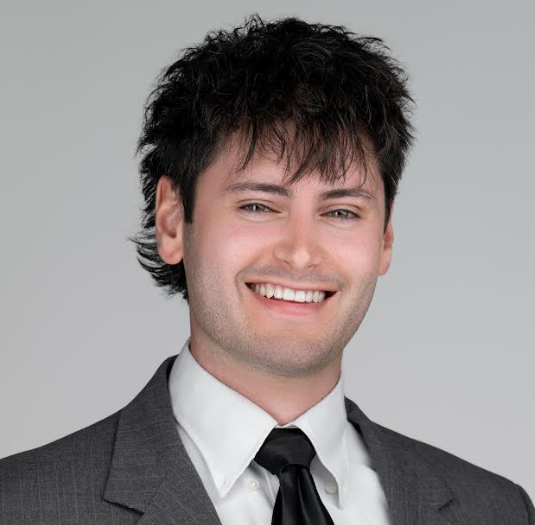
Joshua Davis, was interviewed by Arush Chandna, the co-founder of Inspira Advantage, a medical school admissions consulting company.

.svg)

