Get in touch: +1 888 453 5021


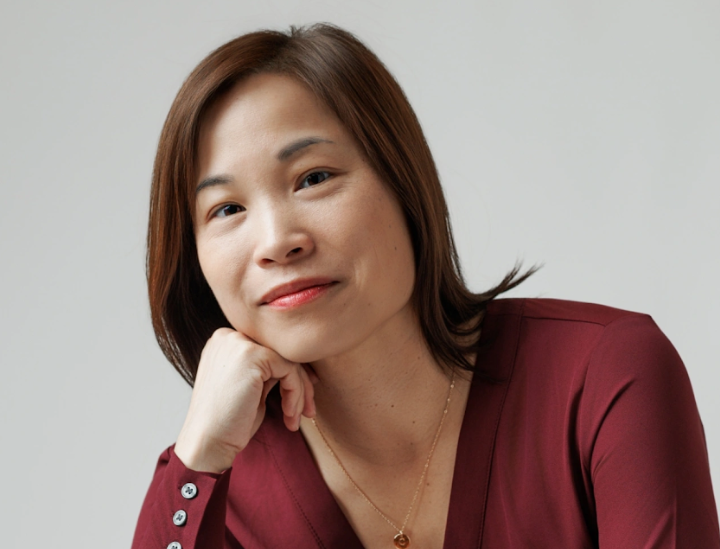
Colleen M. Nguyen, MPH, is the Executive Director of Asian Women for Health.
One of the biggest challenges we see is that the health needs of Asian women can be incredibly easy to overlook.
In the United States, Asian Americans are often grouped together as one homogenous population, with the assumption that we are generally doing well. But the truth is that the term “Asian” represents an incredibly diverse group of people, with different languages, cultures, immigration experiences, economic circumstances, and health needs. When all of those experiences are combined into one category, it can hide the fact that some communities are struggling.
At Asian Women for Health, we see women who have difficulty finding health information in a language they understand, who may feel uncomfortable talking about mental health or reproductive health, or who simply don't know where to turn for help. And sometimes the barriers are very practical: the cost of care, transportation, taking time away from work, caring for children or aging parents, or trying to navigate a healthcare system that can be confusing even when English is your first language.
Our work begins by listening. We work with and alongside community members and local organizations to understand what people actually need and then build programs around those needs. That might mean offering health education in someone's preferred language, training community health workers who can help people navigate care, creating safer spaces to talk about mental health, or working with researchers so Asian communities are better represented in health studies.
For us, the goal isn't simply to give people more health information. It's to help people feel informed, confident, and able to have a voice in their own care.
I can't say that these gaps are directly causing more Asian women to pursue medicine or public health, but I do see tremendous interest among young Asian women who want to make a difference in health and healthcare.
For many, that interest is personal. They may have grown up translating for a parent or grandparent at a doctor's appointment. They may have watched someone they love struggle to find a provider who understood their language or culture. They may have seen mental health go unspoken within their family, or wondered why people who looked like them were rarely included in health research.
Experiences like these can shape the questions you begin asking: Why is this so difficult? Whose experiences are missing? And what could I do to make it better?
What I find especially encouraging is that many young women aren't simply asking how they can become physicians, researchers, or public health professionals. They're thinking about what they can do once they're there—and how they can make healthcare work better for the people and communities they care about.
I would tell her that there is tremendous value in what she already carries with her.
Medical school will teach you the science of medicine—how to understand disease, make a diagnosis, and treat a patient. But learning how to truly see the person in front of you requires something more. It requires empathy, curiosity, and the humility to recognize that you may understand the medicine without fully understanding the person experiencing it.
Your community can teach you things that may never appear in a textbook: how culture shapes the way someone talks about pain or illness, why someone may hesitate to ask for help, how family influences health decisions, or why the “right” treatment on paper may not make sense in the context of someone's life.
Don't lose sight of that as you move through your training. Empathy isn't simply feeling for someone. It's being willing to listen closely enough to understand what matters to them and allowing that understanding to shape how you care for them.
I would also tell her that being an Asian woman doesn't mean she has to speak for every Asian person she encounters. Our communities are far too diverse for any one of us to represent all of them. A shared identity doesn't necessarily mean a shared experience. Stay curious. Ask questions. Be willing to say when you don't know something.
Most of all, remember that there is a difference between treating someone and truly seeing them. Medicine may give you the knowledge and tools to treat disease. Empathy helps you remember that the person sitting across from you is more than a diagnosis.
I think it starts with recognizing that representation alone isn't enough. It's important to see Asian women in medicine, research, and leadership, but we also have to ask whether the systems they are entering—and the systems caring for them—actually understand and respond to their experiences.
For patients, that means recognizing the tremendous diversity within Asian communities rather than treating “Asian” as a single experience. It means making health information available in the languages people actually speak, making sure Asian women are included in medical research, and building stronger relationships with the community organizations and trusted leaders who often understand where the gaps are long before larger institutions do.
For Asian women entering medicine, mentorship and opportunities for leadership matter, but so does belonging. They should be able to bring their experiences and perspectives into their training without being expected to speak for an entire race or culture. And medical education should prepare future physicians to understand that good care isn't about memorizing what is supposedly true about a particular group of people. It's about learning to ask better questions, listen to the answers, and understand the person in front of you.
Ultimately, I think we need to shift the question from, “How do we help people fit into the healthcare systems we've already built?” to, “How do we build healthcare systems that better reflect and respond to the people they are meant to serve?” And that requires inviting communities to be part of shaping those systems—not simply asking them to navigate them.
Colleen M. Nguyen, MPH, was interviewed by Arush Chandna, the co-founder of Inspira Advantage, a medical school admissions consulting company.

.svg)

