Get in touch: +1 888 453 5021



A dental anesthesiologist is a dentist who completes a CODA-accredited residency to administer sedation and general anesthesia for dental and oral surgical procedures. Dental anesthesiologists manage every level of anesthesia, from local injection to full general anesthesia.
Here are the steps to becoming a dental anesthesiologist:
CODA-accredited dental anesthesiology residencies are few, and seats per program are limited. So competition runs high. For help mapping your route through any of these stages, work with one of Inspira's dental school admissions experts.
A dental anesthesiologist succeeds on a specific mix of clinical vigilance, fast judgment, and the ability to calm a frightened patient. The skills below map to what the accrediting standards require and to what the job demands minute to minute:
The margin for error here is small. Your monitoring and your response time are what keep an unconscious patient safe. That’s why programs train these skills to the level of proficiency rather than familiarity.
Dental anesthesiologists earn an average of $393,215 per year, or about $189 an hour, according to ZipRecruiter as of June 2026. Reported figures run from roughly $290,000 at the low end to near $399,000 at the high end. Dental anesthesiologists are among the highest-paid dental specialists in the U.S.
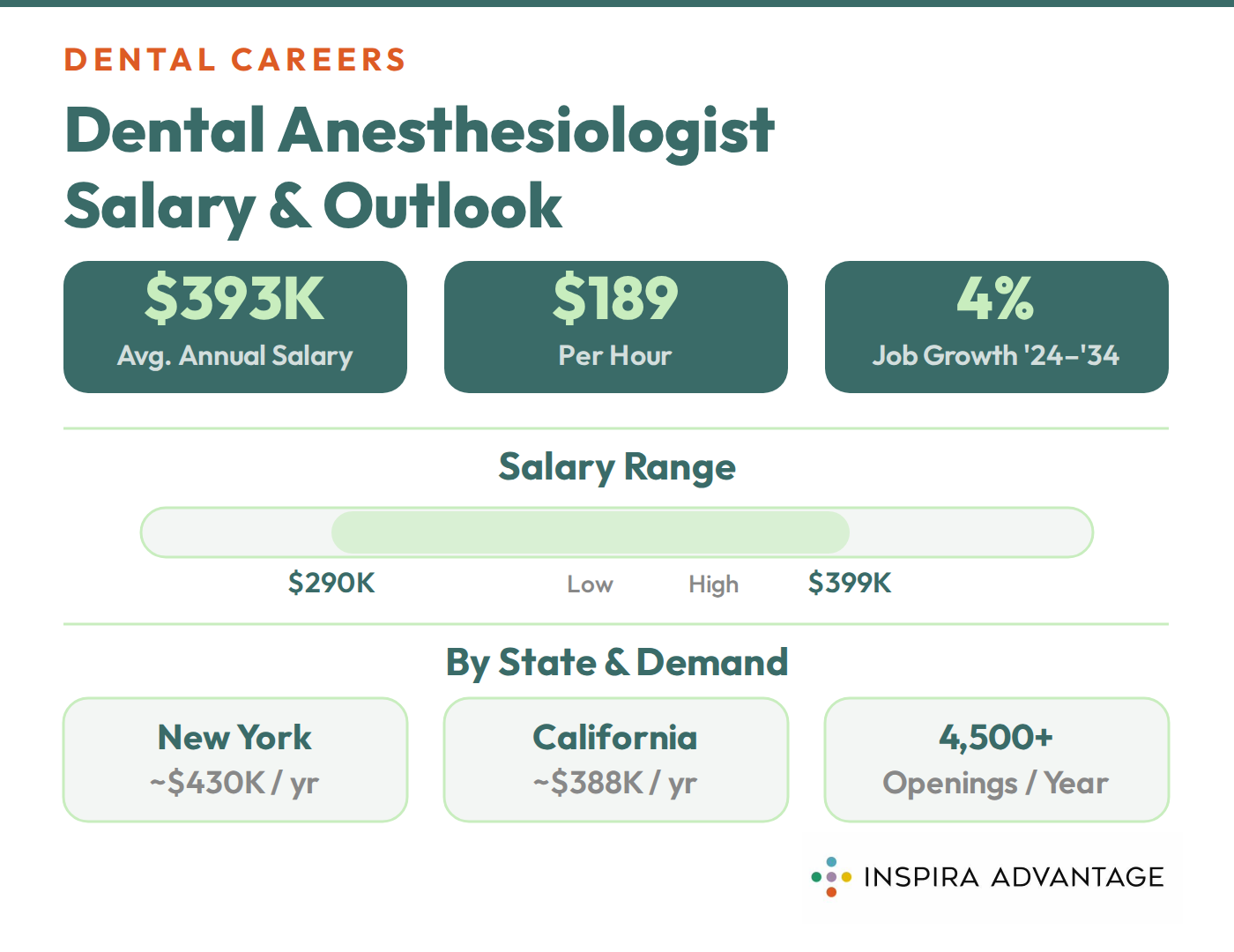
Dental anesthesiologists in New York average around $430,000, while those in California sit near $388,000. The pay reflects the scarcity of trained specialists and the complexity of the work, since you take on the sedation cases that general dentists can’t handle.
Demand for dental anesthesiologists is fairly strong. The Bureau of Labor Statistics (BLS) projects 4% employment growth for dentists from 2024 to 2034, about as fast as the average across all occupations, with roughly 4,500 openings a year.
(The BLS doesn’t track dental anesthesiology as a separate occupation, so read that 4% as the broader figure rather than a precise measure of this specialty.)
Consumer spending on dental care rose by 10% over the last five years. Scarcity, plus a referral-driven caseload, means strong job security for anyone who completes the training.
The hardest parts of becoming a dental anesthesiologist are landing one of the few residency spots, financing four degrees, and clearing a licensure process that stacks several exams on top of a separate anesthesia permit. Each challenge below shows where candidates feel the most pressure and how to get ahead of it.
The residency is the tightest bottleneck on the entire path. CODA accredits only nine dental anesthesiology residency programs as of June 2026, and each accepts only a few residents each year.
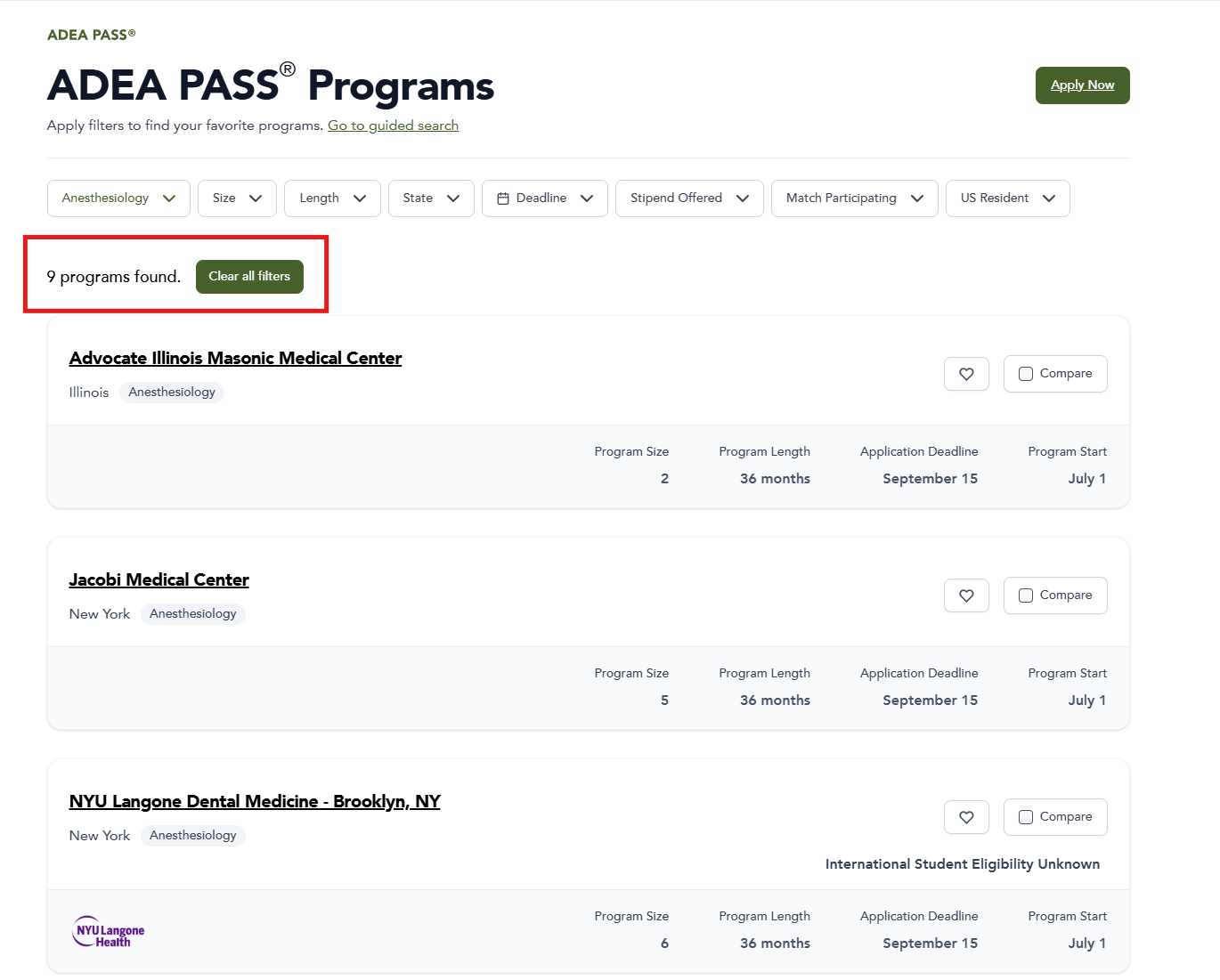
Pitt and Stony Brook each select a maximum of four residents per year. Dental anesthesiology runs through Phase I of the Postdoctoral Dental Matching Program, and applicants who go unmatched rarely find open seats afterward.
Your transcript, recommendation letters, and anesthesia exposure carry significant weight. Shadow dentist anesthesiologists, take on a research project, and consider an anesthesia internship or AEGD year to lift a borderline application.
You commit at least 11 years and four degrees before you earn money as a specialist. The financial weight lands hardest in dental school. Indebted graduates of the dental school class of 2025 owed an average of about $297,800, on top of any undergraduate loans.
Map your financing in undergrad, target lower-cost programs where you can, and treat scholarships as part of the plan rather than a bonus.
Earning the credential to practice takes more than finishing residency. A dental license requires the INBDE, a regional clinical exam such as ADEX or CRDTS, and a state jurisprudence exam.
Administering deep sedation or general anesthesia then requires a separate state permit, which your CODA-accredited residency makes you eligible for but doesn’t grant automatically.
States like Washington require a facility inspection and current ACLS certification before issuing the permit. Research your target state's permit requirements during residency; inspections and paperwork can take months before you can legally sedate a patient.
Becoming a dental anesthesiologist takes at least 11 years after high school. This includes four years of undergrad, four years of dental school, and a three-year residency. Gaining experience and taking the DAT fit inside your undergraduate years, so they add depth without adding time. Licensing and your state anesthesia permit come after residency.
Dental anesthesiologists don’t go to medical school. The path runs through dental school for a DDS or DMD, followed by a CODA-accredited dental anesthesiology residency, not an MD program. Residents often train alongside physician anesthesiology residents in the hospital, which is where the confusion comes from.
Dental anesthesiologists work in private dental offices, ambulatory surgery centers, and hospital operating rooms. Much of the work involves traveling to dental practices to sedate patients whom other providers can’t safely treat awake. Some hold hospital-based or academic roles tied to residency programs.
Becoming a dental anesthesiologist is hard, mainly because residency seats are scarce and competitive. CODA accredits only nine programs, and each accepts only a few residents per year through Phase I of the dental Match. Strong grades, recommendation letters, and anesthesia exposure separate the applicants who match from those who don’t.
The degree you need to become a dental anesthesiologist is a DDS or DMD, earned after a bachelor's degree. You then complete a CODA-accredited dental anesthesiology residency, which grants a certificate in the specialty rather than another degree. Both degrees qualify you equally.
You can become a dental anesthesiologist with a DMD instead of a DDS. The two degrees are equivalent, cover the same curriculum, and meet the same licensing and residency requirements. Schools simply choose which title to award, so neither carries an advantage for specialty training.
Dr. Jonathan Preminger was the original author of this article. Snippets of his work may remain.
Orthopaedic Surgery Resident Physician
Lewis Katz School of Medicine at Temple University


Get 15+ free dental school personal statements written by our succcessful applicants free of charge. No strings attached.

.svg)

